Investing guides for beginners and busy people: index funds, ETFs, individual shares and the strategy behind them, explained without jargon and with every claim sourced.
Investing is the business of owning something productive for long enough that it pays you back. That is the whole idea, and almost every argument you will read about it is really an argument about two things underneath: how much volatility you can live with, and how much you are paying to take it on.
Most beginner guides skip both. They explain what a share is, list five brokers, and leave you to discover on your own that a 1 percent annual fee can quietly take a large slice of a thirty-year result, or that an index which has returned roughly 10 percent a year on average has done so while falling by more than a third in some individual years. The average is the headline. The path is the experience.
If you have a small amount to put in each month and no idea where it should go, start with how to invest in stocks with little money, which deals with the fractional shares and minimum-deposit questions that actually block people at the beginning.
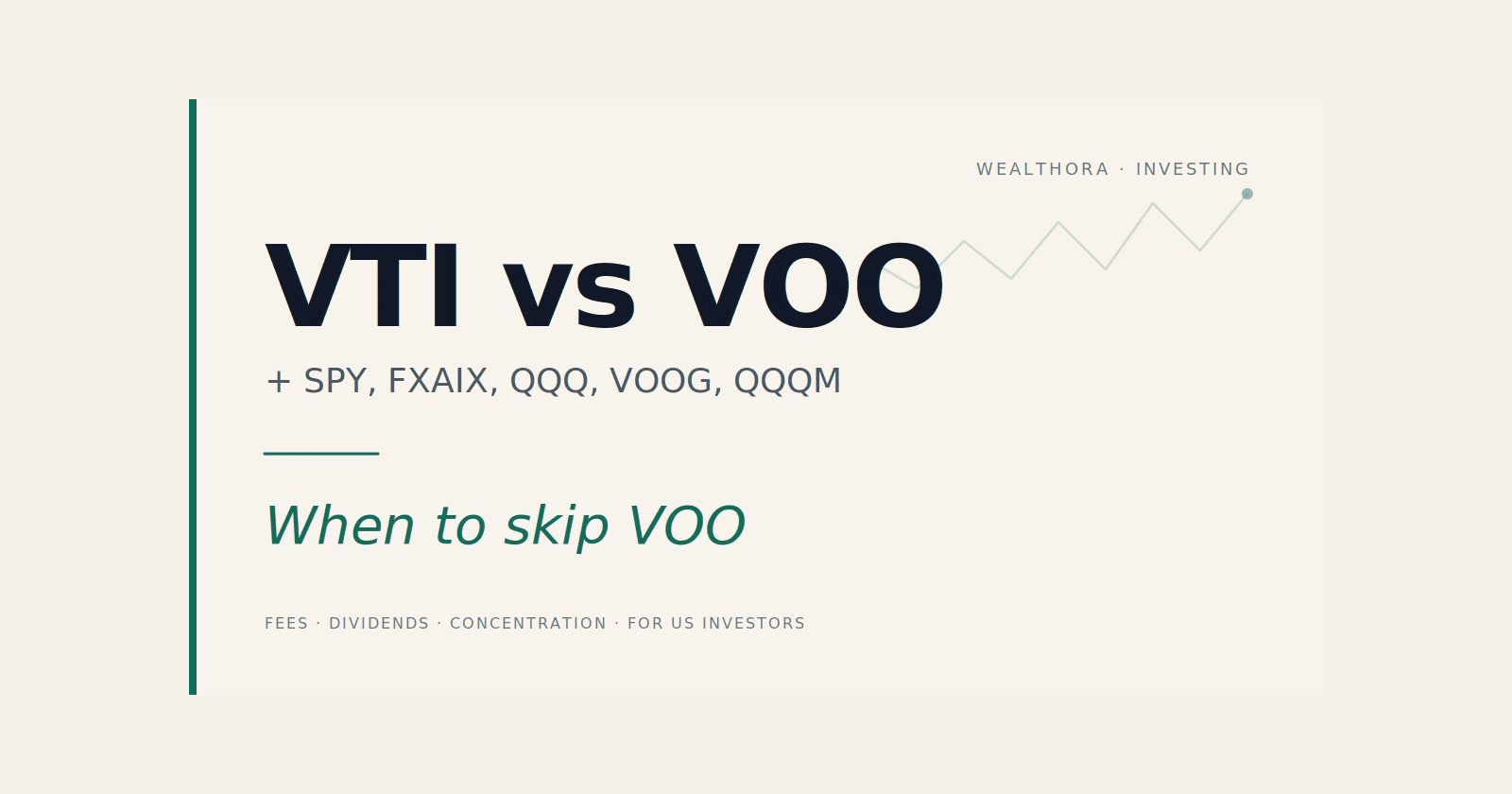
If you have already decided to buy an index fund and are stuck choosing between two of them, VTI vs VOO works through what the overlap really costs you, including the case for skipping the more famous one.
If you are trying to read the market rather than buy it, S&P 500 futures explains why futures are not a forecast of the open, and what the margin and 60/40 tax treatment mean in practice.
And before you commit to a monthly figure, run it through the compound interest calculator. Seeing the split between what you paid in and what the market added changes how most people choose that number.
Two primary sources settle more arguments than any blog post. The SEC's investor education site, investor.gov, publishes plain-language explanations and its own calculators, and it has no product to sell you. For the question of whether active funds beat their index, S&P Dow Jones Indices publishes the SPIVA scorecards twice a year, measuring active funds against their benchmarks over one, three, five, ten and twenty years. It is the same dataset the industry quotes and it is free to read.
Everything in this section is written for people who intend to hold for years rather than days. Where a piece is about a single company or a single week, it is filed in the Finance Wire instead.
Most beginners start with a low-cost index fund or ETF tracking a broad market, held inside a tax-advantaged account such as a 401(k), IRA, ISA or SIPP. Contributing a fixed amount each month avoids timing the entry, and broad index funds commonly charge under 0.25% a year.