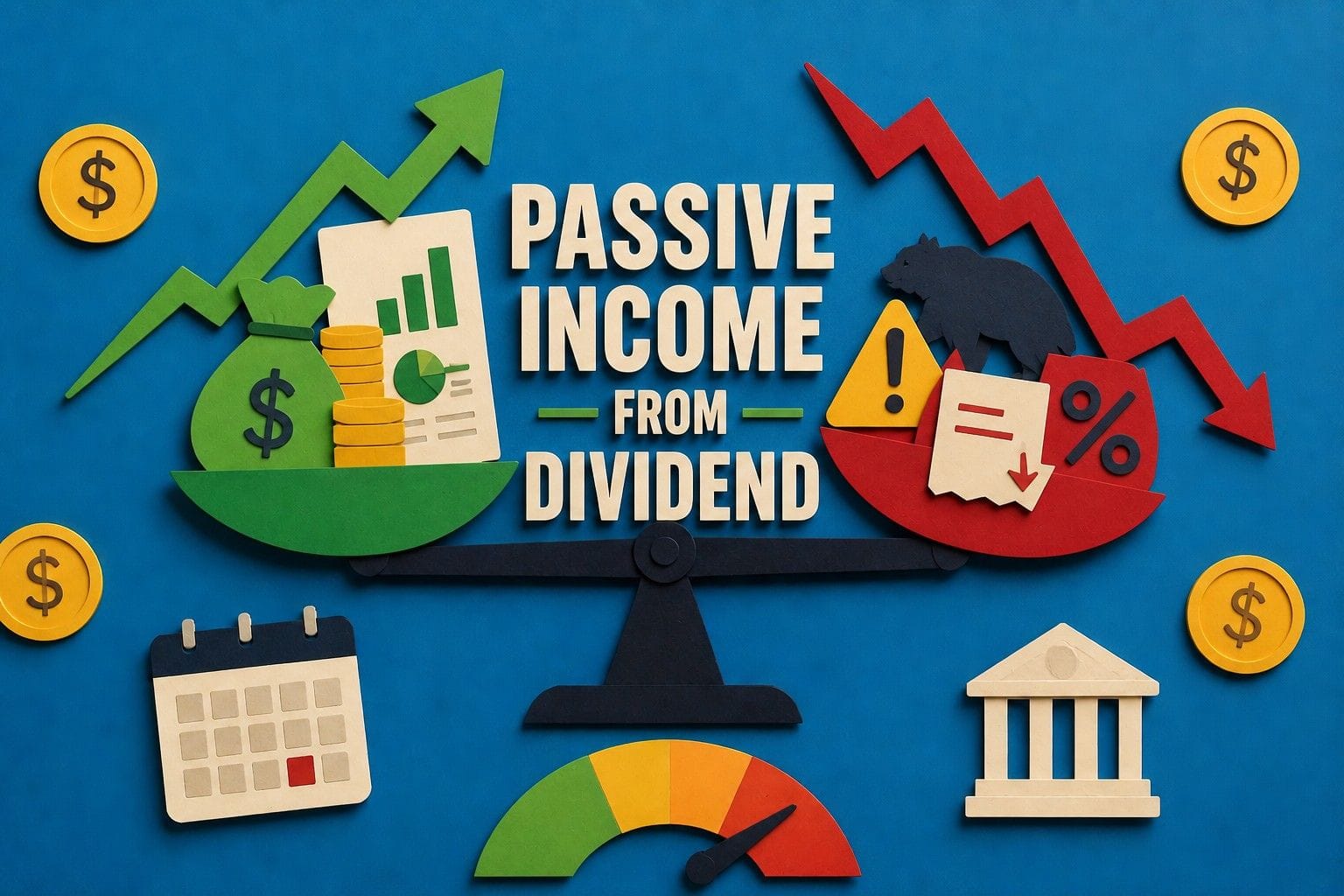
Income that keeps paying after the work is done: dividends, rental yield, REITs and side income, with honest numbers on what each one actually returns.
Passive income is the most oversold phrase in personal finance, so it is worth being precise about what it means here. An income stream is passive when the work and the money have been separated: you did something once, or bought something once, and it continues to pay without you repeating the effort. By that definition a dividend portfolio qualifies, a rental qualifies on a bad month and not a good one, and most of what gets sold as passive income online is a job with a flexible schedule.
That last category is not worthless. It is just not passive, and calling it passive is how people end up disappointed. This section separates the two honestly.
On the genuinely passive side, dividend stocks and what they really return deals with the gap between a quoted yield and what lands in your account after tax, and with why a very high yield is usually a warning rather than an opportunity.
On the active side, honestly labelled, part-time remote work is about trading hours for money on better terms, which is a reasonable goal and a different one.
And underneath both, the money habits piece covers the part nobody monetises: the behaviour that decides how much of your income survives the month in the first place. No income strategy outruns a spending problem.
Any passive income plan reduces to one calculation: how much capital you need for the income you want, at a yield you can actually sustain. Work it out before you choose a strategy, not after, using the compound interest calculator or the savings goal calculator. Most people discover the required capital is larger than the stories suggest, and the useful response is to start earlier rather than to reach for a higher yield.
Tax changes the answer more than most articles admit, and it changes by country and by year, so check the current position at the source: the UK's tax on dividends guidance on gov.uk, or the SEC's investor education material at investor.gov. Both are free, current, and selling nothing.
Passive income is money that keeps arriving after the work is done: dividends from shares, distributions from REITs, rental yield from property, and interest from bonds or savings accounts. Many ideas marketed as passive require ongoing work, and real returns are usually well below the headline claims.