Hong Kong dollar facility: why Congress wants the Fed to cut it off
A U.S. congressman is pushing the Federal Reserve to revoke Hong Kong's access to emergency dollar borrowing as China builds its own financial rival.

Key Takeaways
- Rep. John Moolenaar wants the Fed to end Hong Kong's access to the FIMA repo facility, which lets central banks borrow dollars using Treasuries as collateral.
- Hong Kong's financial autonomy has collapsed under Chinese control, making the Fed's dollar lifeline harder to justify, according to Moolenaar.
- Cutting access could backfire: some economists argue the facility actually strengthens the dollar by offering a safer option than China's own new borrowing scheme.
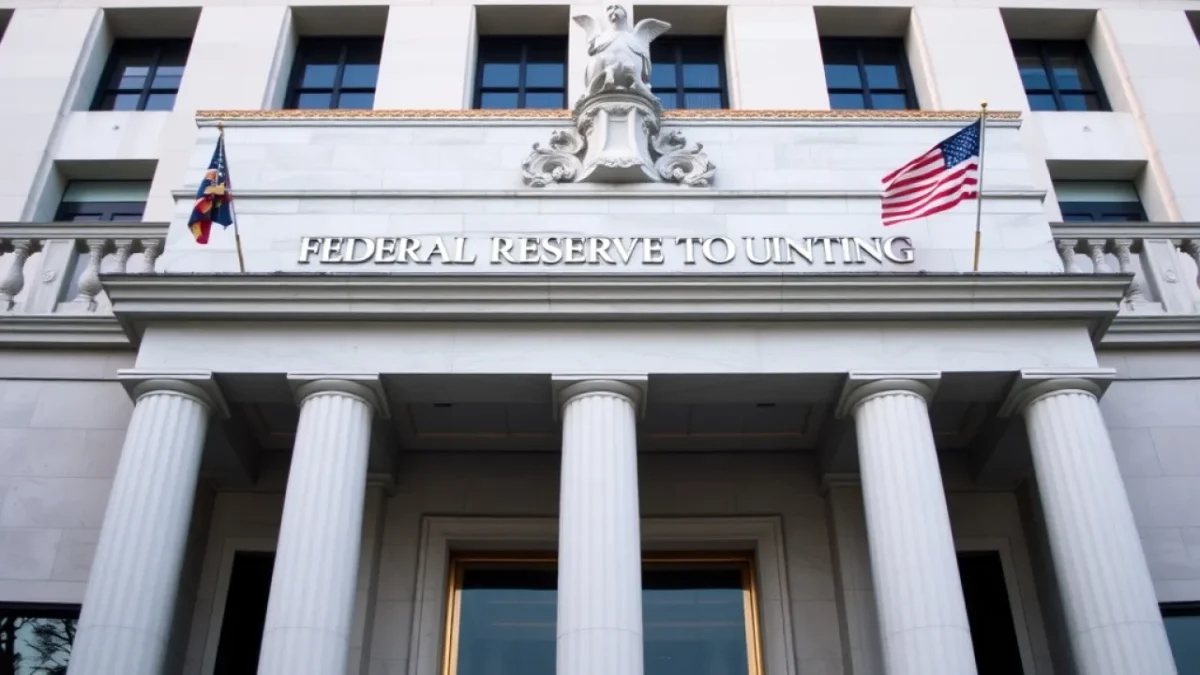
A Republican congressman is pushing the Federal Reserve to rethink Hong Kong’s access to the Hong Kong dollar facility, a backstop that lets foreign central banks borrow dollars during crises, according to CNBC. Rep. John Moolenaar chairs the Select Committee on the Chinese Communist Party and argues that Hong Kong no longer merits preferential treatment under U.S. law because China has dismantled its legal autonomy.
The Hong Kong dollar facility in question is the Fed’s FIMA repo facility (FIMA stands for Foreign and International Monetary Authorities). It is the financial equivalent of a panic button: if a central bank needs dollars urgently but does not want to dump Treasury bonds onto the market and crater prices, it can borrow dollars from the Fed overnight, pledging its Treasury holdings as collateral. The Hong Kong Monetary Authority received access when the Fed created the facility in 2020.
The timing of Moolenaar’s letter matters. China has started copying the American playbook. In June 2026, China’s central bank launched its own version of the Hong Kong dollar facility, allowing other central banks to borrow Chinese government bonds in the same way. Hong Kong was the first user. This is part of a broader effort by Beijing to make the yuan a serious competitor to the dollar as the world’s reserve currency.
| Hong Kong's FIMA usage | Drew $1.4 billion in May 2020; has not materially used it since |
|---|---|
| Yuan's share of reserves | 2.1% of global central bank reserves, versus 56.7% for the dollar |
| FIMA facility created | 2020, during Covid-era market turmoil |
| China's rival facility | People's Bank of China launched its own FIMA equivalent in June 2026 |
| Current FIMA usage | Zero central banks using the facility as of latest Fed reporting |
Why a congressman is challenging the Hong Kong dollar facility now
Moolenaar’s argument rests on a simple observation: the Hong Kong that justified access to the Hong Kong dollar facility in 2020 no longer exists. Back then, Hong Kong had a separate legal system, independent courts and a distinct financial architecture inherited from 155 years as a British colony. It was genuinely autonomous from mainland China, which was why the Fed said it “could be a template for others.”
That autonomy is gone. China passed the National Security Law in 2020 and has since consolidated control over Hong Kong’s courts, media, elections and civil service. To Moolenaar, extending a dollar lifeline to a territory that is now firmly under Communist Party control contradicts the original rationale for the Hong Kong dollar facility.
His letter to the Fed also flags a strategic concern: why should America bankroll stability in Hong Kong when China is actively working to make the dollar less essential? The yuan currently accounts for only 2.1 percent of global central bank reserves, compared to 56.7 percent for the dollar, but Beijing is trying to close that gap. Giving Hong Kong a safety valve contradicts the goal of limiting dollar alternatives.
How much has Hong Kong actually borrowed from the Fed?
Very little. Hong Kong drew up to $1.4 billion in May 2020 when markets were in freefall, but has barely touched the Hong Kong dollar facility since. The Fed’s latest data show zero usage across all central banks using the facility. In other words, the financial stakes are tiny, which is precisely why Moolenaar argues now is the time to act, before a crisis makes withdrawal look vindictive.
The case against cutting off Hong Kong’s dollar facility access
Experts warn that removing Hong Kong from the Hong Kong dollar facility could create a perverse outcome. Eswar Prasad, an economics professor at Cornell, points out that the facility is not a subsidy or a transfer of wealth. It is a liquidity tool that reinforces confidence in the dollar and in U.S. Treasury securities as the world’s safest asset.
If Hong Kong loses access and needs dollars in a crisis, it has two options: sell Treasuries (damaging prices) or tap China’s new central bank borrowing facility. Both outcomes weaken the dollar’s position. The first creates instability; the second pushes Hong Kong closer into China’s financial orbit.
The Fed’s protective umbrella, in this logic, is not helping China. It is a shield around the dollar itself. Central banks use the Hong Kong dollar facility because they trust the Fed, the dollar and the rule of law. China’s equivalent facility, launched in June, operates under Communist Party control with no guarantee of political neutrality. Global central banks will prefer the American option, assuming access survives.
A spokesman for the Fed said the agency received Moolenaar’s letter and plans to respond. Fed Chair Kevin Warsh is unlikely to revoke Hong Kong’s access during a moment of delicate U.S.-China diplomacy, analysts told CNBC. But the letter signals a new front in the currency war: Congress is starting to treat the Fed’s own facilities as instruments of China policy.
Explore our guides on reserve currencies, central bank tools and the dollar’s role in global finance for deeper context on how these mechanisms shape international trade and investment flows.
More on hong kong dollar facility from Thewealthora
- Institutional investors stock market dominance returns as retail traders retreat
- Trump tariffs on Canada: Maine’s logging crisis deepens
- AI trading algorithms: retail investors go automated
- US jobs data: why markets are holding their breath
Originally reported by CNBC. Facts verified; analysis and wording are Thewealthora’s own.

Ethan Caldwell
Executive Editor, Markets
Ethan Caldwell is Executive Editor of Thewealthora's Finance Wire, the desk that carries this site's fast coverage of US equities, corporate earnings, central bank decisions and the macro calendar.