Trump tariffs on Canada: Maine’s logging crisis deepens
Loggers in Maine shut down as Trump tariffs on Canada push equipment costs up 30-50%, straining a centuries-old industry tied to cross-border supply chains.

Key Takeaways
- Maine loggers report equipment costs up 30-50% since Trump tariffs on Canada began 22 August
- Molly London closed her decade-old family logging business, citing tariffs making it impossible to operate profitably
- 40% of Maine's exports go to Canada, and the state relies on Canadian mills to process raw timber for US housing
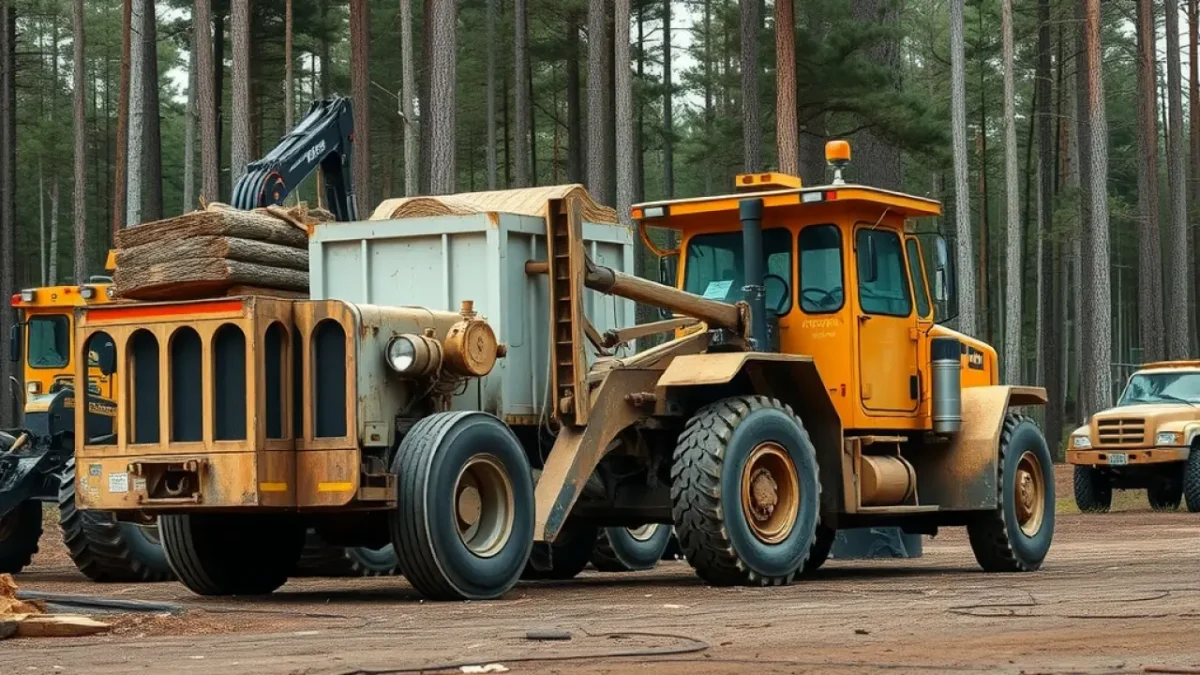
Trump tariffs on Canada are forcing a historic logging state to confront the cost of trade war, as family businesses that have survived centuries of booms and busts now cannot afford to operate. According to The Guardian, Maine’s timber industry is collapsing under the weight of equipment costs that have risen 30% to 50% since tariffs began in late August, with workers and business owners describing a spiral that feels terminal.
Molly London and her husband Alex spent a decade building WW London Woodlot Management Company, a logging operation in Penobscot County, one of Maine’s most densely forested regions. The business should have thrived: summer 2026 delivered ideal weather for harvesting, the trees were the right size, and demand existed. Instead, the couple shut down in August, defeated by rising costs they could no longer absorb.
“It just didn’t feel right any more,” London said. “We’ve been losing for a long time, and this is just getting worse.”
| Maine's exports to Canada | Roughly 40% of state exports go north |
|---|---|
| Equipment cost increase for loggers | Prices up 30% to 50% since Trump tariffs announced |
| Trump tariffs on Canada took effect | 50% levy on select Canadian goods from 22 August |
| Canada's retaliatory tariffs range | 15% to 50% on $20bn of American imports |
| Years operating before closure | WW London Woodlot Management Company ran for nearly 10 years |
How Trump tariffs on Canada broke the logging supply chain
The damage flows directly from Trump tariffs on Canada, which took effect 22 August at 50% on select goods. Canada responded with retaliatory tariffs ranging from 15% to 50% across $20 billion of American imports. For loggers who rely on Canadian-made parts, equipment and replacement machinery, the result was immediate and brutal.
London’s machines sat idle for weeks waiting for replacement parts no longer stocked locally because Trump tariffs on Canada made them prohibitively expensive. Dana Doran, executive director of the Professional Logging Contractors of the Northeast, confirmed that every logger in the region faces the same squeeze: parts, equipment and truck prices all jumped the moment Trump tariffs on Canada took effect.
Crucially, the problem extends beyond parts. The US relies on Canadian sawmills to process raw Maine timber into finished lumber used in American home construction. When Trump tariffs on Canada disrupt that pipeline, it strains the entire chain from forest floor to housing site.
Why the logging industry was fragile even before Trump tariffs on Canada
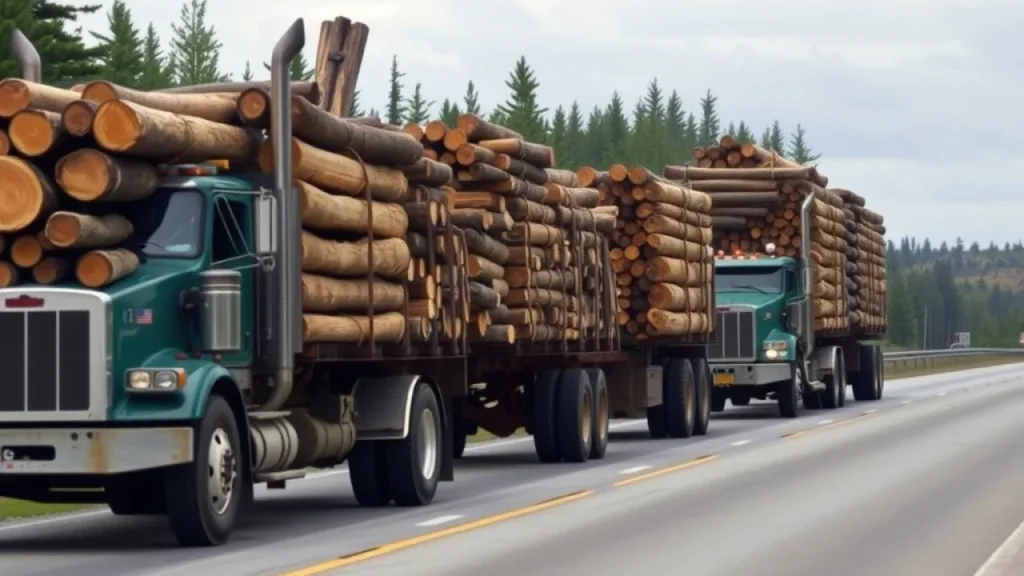
This state has called itself the timber capital of the world. Logging is woven into Maine’s identity, its landscape and its economy. For generations, it was the work you did, the business you inherited. Yet even before Trump tariffs on Canada arrived, the industry was cracking.
Rising diesel costs, climbing insurance and payroll, shrinking demand for new homes as mortgage rates stayed high, and a workforce that had stopped believing in a future there: all of this had already forced consolidation. Small, family-run operations that once passed from parent to child had begun to disappear. Many longtime owners now actively discourage their children from entering the family trade.
When the Londons started their business in 2017, experienced loggers warned them it was a mistake. They persisted anyway, equipped with Molly’s master’s degree in forestry and Alex’s hauling and trucking experience. For years they weathered rising costs. After Covid, those costs accelerated. By 2025, they had stopped offering their own family health insurance to save money so they could keep offering it to their crew. Friday night pizza dinners became home meals. Their children enrolled in school food programs for the first time.
Trump tariffs on Canada did not create that crisis, but it finished it. “This year in particular, the tariffs made it just impossible,” London said.
Why Maine’s relationship with Canada matters economically
Maine is not a state that trades with Canada as a distant abstraction. Roughly 40% of Maine’s exports flow north. Canadian and American flags fly side by side across towns that depend on tourism and cross-border labour. Families have relatives on both sides. Patrick Woodcock, president of the Maine State Chamber of Commerce, calls it “a little bit of a shared destiny.”
When Trump tariffs on Canada sever that relationship, they do not just hit spreadsheets: they rupture communities. The tariffs broke negotiations between the two countries at the final hour, leaving no room for exemptions or gradual implementation. Loggers, fishers, farmers and manufacturers now compete with tariffs while their competitors in other states do not face the same burden.
What Maine voters will decide in the midterms
The fallout has become political oxygen for Maine’s Senate race. Challenger Troy Jackson, a former state senate president, built his campaign identity as a “fifth-generation logger.” Democrats believe Trump tariffs on Canada, combined with the broader cost of living crisis, will finally unseat Republican Susan Collins, who has held the seat for 29 years and chairs the Senate appropriations committee.
Collins, herself from a lumber family, has responded by doubling down on her regional identity. Yet voters like London feel abandoned. Trump promised to fight inflation, lower grocery and gas costs, and drain corruption from Washington. Instead, Trump tariffs on Canada appear to have made the cost of operating a logging business impossible.
“If you read the news,” London said, “it doesn’t seem like the Trump administration cares. At some point, we have to just see this for what it is.”
Whether Maine voters will punish Republican incumbents for Trump tariffs on Canada remains uncertain. Polling shows Collins and Jackson in a tight race. What is certain: the generation of loggers that once shaped Maine’s future has largely decided to leave, and Trump tariffs on Canada have accelerated that exodus beyond any point of return.
Thewealthora’s guides to supply chain disruption and tariff impacts on US business explore these economic mechanisms in depth.
More on trump tariffs on canada from Thewealthora
- AI trading algorithms: retail investors go automated
- US jobs data: why markets are holding their breath
- Election outcomes stock market: how to position before November
- Tech stock rotation isn’t AI retreat, Cramer says
Originally reported by The Guardian. Facts verified; analysis and wording are Thewealthora’s own.

Ethan Caldwell
Executive Editor, Markets
Ethan Caldwell is Executive Editor of Thewealthora's Finance Wire, the desk that carries this site's fast coverage of US equities, corporate earnings, central bank decisions and the macro calendar.