Do Not Buy SpaceX Stock (SPCX) Until You See These Starlink Numbers
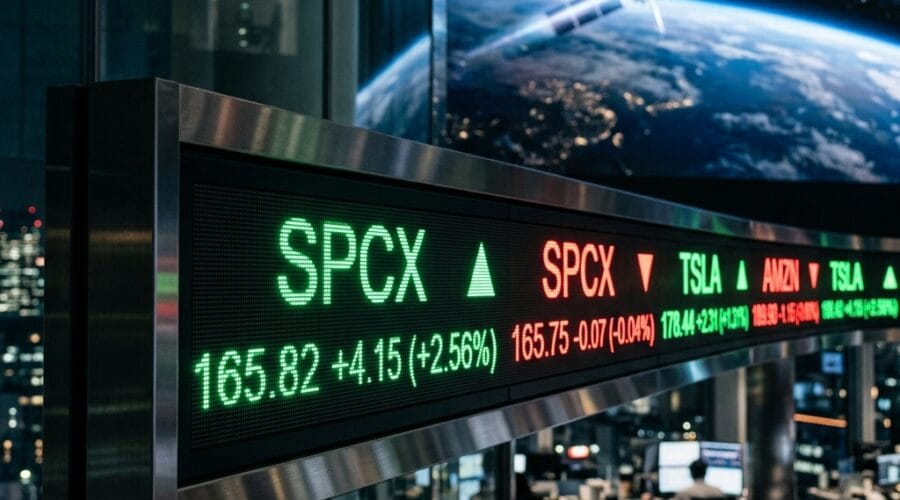
SpaceX (SPCX) just crashed below its $135 IPO price. But if you think it's just a rocket company, you're being played. Inside the August 4th catalyst.

Quick AI Overview Summary
- Current Status: SpaceX (SPCX) held its IPO in June 2026 at 135.Itiscurrentlyexperiencingapost−IPOdip(tradingaround115-$127).
- The Core Value: SpaceX is fundamentally a high-margin telecom monopoly (Starlink), not just a rocket manufacturer.
- Key Catalyst: The upcoming Q2 earnings report on August 4, 2026, will reveal Starlink’s profitability for the first time.
- Immediate Risk: A massive insider “lock-up” expiration in early August may flood the market with shares, creating short-term downward pressure.
The hype around SpaceX going public was deafening. On June 12, 2026, the company finally opened its doors to retail investors under the ticker symbol SPCX. Millions of people rushed to buy a piece of the future.
They bought shares because they love watching giant rockets launch into space. They bought because they believe in the mission to Mars. But investing based on rocket launches is a mistake. If you are buying SPCX because of rockets, you are missing the entire financial point of the company.
SpaceX is not a traditional aerospace manufacturer. It is a rapidly growing telecom monopoly disguised in a spacesuit.
In this analysis, we will break down the real numbers behind the stock. We will look at why the stock has dipped recently. Most importantly, we will reveal the massive catalyst coming in August 2026 that Wall Street is quietly preparing for.
1. The IPO Reality Check
Let us look at the timeline. The SPCX Initial Public Offering (IPO) happened in mid-June 2026. The stock was initially priced at $135 per share.
The market reaction was explosive. Within four days, retail enthusiasm pushed the stock to an intraday peak of $225.64 on June 16. People were celebrating massive paper profits.
Then, gravity took over. The stock began a steady decline. It recently crashed below its IPO price, trading in the 115to127 range.
Many amateur investors are panicking. They see the falling price and assume the company is in trouble. This could not be further from the truth. The drop has nothing to do with rockets failing or bad management.
The recent stock dip is a classic post-IPO market correction, driven by institutional selling and upcoming lock-up fears. We will explain what a lock-up period is shortly. First, we need to understand how SpaceX actually makes its money.
To track standard market definitions of IPO behavior, you can read more at Investopedia.
2. The Starlink Trojan Horse
When you buy a share of SPCX, you are buying the entire company. This includes the Starship program, the Falcon 9 launch business, and Starlink.
Starlink is the global satellite internet division of SpaceX. There has been a lot of rumor over the years that Starlink would have its own separate IPO. That did not happen. Starlink remains a core division of SpaceX.
This is the most important fact for investors to grasp. Starlink is the Trojan Horse of the space industry. Launching rockets is incredibly expensive and has notoriously low profit margins. Providing internet service to millions of people globally is a high-margin cash machine.
Consider the recent Starship Flight 13. Most news outlets focused on the booster splashing down in the ocean. But the real story was the payload. Flight 13 deployed 20 massive Starlink V3 satellites.
These V3 satellites are game changers. Each one delivers a staggering 1 Terabit per second (Tbps) of data capacity. They sit in Very Low Earth Orbit, which kills the lag usually associated with satellite internet.
Because SpaceX owns the rockets, they launch these satellites at cost. No other telecom company in the world can build and launch a global internet network as cheaply as SpaceX. They have effectively built a moat that competitors cannot cross.
3. The Numbers That Actually Matter
Let us look at some hard numbers to prove this point. The financial strength of SPCX is directly tied to Starlink subscription revenue.
Here is a breakdown of the stock metrics and estimated revenue impacts.
The SPCX Valuation Table
| Metric | Financial Value | Investor Takeaway |
|---|---|---|
| IPO Price (June 12, 2026) | $135.00 | The baseline valuation set by Wall Street. |
| All-Time High (June 16, 2026) | $225.64 | Driven by retail FOMO (Fear Of Missing Out). |
| Current Trading Range | 115.00to127.00 | A healthy correction presenting a potential discount. |
| Starlink V3 Data Capacity | 1 Tbps per satellite | Massive increase in potential paying customers per region. |
| Estimated Telecom Margin | Over 60% | Telecom services yield massive profits compared to hardware. |
Note: Margin estimates are based on industry standards for established internet service providers.
As you can see, the stock price fluctuates wildly. But the underlying capacity for Starlink to generate cash is only increasing. As more V3 satellites go up, the network gets faster, and more customers sign up.
If you want to understand how traditional telecom margins work, check out the Federal Communications Commission (FCC) reports on broadband economics.
4. The August 4 Earnings Catalyst
This brings us to the most critical date on the calendar for SPCX shareholders. August 4, 2026.
On this date, SpaceX will release its second-quarter financial results. This is a massive event. It will be the very first earnings report the company issues as a publicly traded entity.
For the first time in history, Wall Street analysts will get a clear look under the hood. Up until now, SpaceX finances have been private and tightly guarded.
Investors are waiting for one specific metric. They want to see the operating profit of the Starlink division. If Starlink shows massive profitability, the stock will likely surge.
However, there is a risk. If SpaceX reveals that the development costs of the Starship program are eating all of Starlink’s profits, the stock could drop further.
The August 4 earnings call will completely dictate the narrative for SPCX for the next five years. It will shift the company from a “story stock” based on Mars ambitions to a “value stock” based on cash flow.
You can track upcoming corporate earnings calendars on financial sites like Bloomberg.
5. The Insider Lock-Up Threat
If the earnings report on August 4 is the catalyst, then the insider lock-up expiration is the looming threat.
What is a lock-up period? When a private company goes public, the early investors and employees are usually not allowed to sell their shares right away. This rule prevents everyone from dumping their stock on day one and crashing the price.
This waiting period is called the “lock-up”. For SpaceX, the first major lock-up expirations begin in early August 2026.
This means that thousands of early SpaceX employees and venture capitalists will suddenly be allowed to sell their shares on the open market. Many of these people have been holding shares for a decade. They are sitting on massive profits, and it is natural that they will want to cash out.
When a massive flood of new shares hits the market, the price usually drops. This is simple supply and demand.
Smart money on Wall Street is fully expecting SPCX to face downward price pressure in August due to insider selling. Retail investors who do not know about this lock-up might panic when they see the red days. But educated investors understand that this is a normal, temporary mechanical event.
You can read a detailed explanation of how insider selling impacts stock prices at Morningstar.
6. Why Retail Investors Are Getting Fooled
The stock market is a game of psychology. Right now, retail investors are making emotional decisions regarding SpaceX.
When a Starship explodes or has a “hard splashdown” like we saw recently, amateur investors sell their shares. They think a rocket crash means the company is failing.
But SpaceX operates on an iterative design philosophy. They blow things up on purpose to learn how to build them better. A lost booster is a planned expense, not a financial disaster.
The real disaster for SpaceX would be a delay in Starlink subscriber growth. That is what pays the bills. But because Starlink subscriber numbers are boring, and rocket explosions are exciting, retail investors focus on the wrong things.
Do not be the retail investor who sells because of a rocket test. Be the investor who buys because the global broadband market is worth hundreds of billions of dollars.
7. The Deep Moat (Competitive Advantage)
In investing, a “moat” is a company’s ability to maintain its competitive advantage over time. SpaceX has the deepest moat in modern corporate history.
Let us look at the competition. Amazon is trying to build a rival satellite internet network called Project Kuiper. Jeff Bezos has committed billions to this project.
But Amazon has a fatal flaw. They do not have a fleet of cheap, reusable rockets. To get their satellites into orbit, Amazon has to buy rides on rockets built by other companies, including the United Launch Alliance.
This means Amazon is paying retail prices for their launches. SpaceX is paying wholesale.
Furthermore, SpaceX’s new Starship can carry significantly heavier payloads than any other rocket. This allows them to launch the massive V3 satellites, which deliver 1 Tbps speeds. Competitors are stuck launching smaller, weaker satellites because their rockets cannot lift the heavy ones.
Vertical integration is the secret to the SpaceX valuation. Owning the rockets and the internet service creates an unbeatable cost structure.
For more context on the broader aerospace industry competition, visit the Space Foundation.
8. Future Valuations and Price Targets
So, where does SPCX go from here?
If the current price is around $120, is it a buy? The answer depends entirely on your time horizon.
In the short term (the next 3 to 6 months), the stock will be highly volatile. The lock-up expiration in August will introduce heavy selling pressure. The upcoming Q2 earnings report will cause massive swings in either direction based on Starlink profitability.
But if you look at the long term (3 to 5 years), the math becomes very clear. The global telecommunications market is massive. Even capturing a small percentage of rural and maritime internet users generates billions in recurring revenue.
Once the Starship program is fully operational and the rockets are rapidly reusable, the cost to launch Starlink satellites will drop to near zero. At that point, SpaceX will print cash.
Many analysts believe that by 2030, SPCX could be one of the most valuable companies on Earth, rivaling the tech giants of today.
9. The Verdict for Investors
If you are buying SPCX today, you must prepare your stomach for turbulence.
The upcoming August lock-up expiration will likely create some scary red days in your portfolio. You must ignore the noise about rocket tests and focus entirely on the Starlink subscriber metrics.
Remember the core thesis. You are not buying a rocket company. You are buying a global internet provider that happens to own a delivery fleet of spaceships.
Treat SPCX as a long-term telecommunications play. Ignore the short-term volatility, watch the August 4 earnings closely, and understand that you are investing in the infrastructure of the future.
Do your own research, understand the risks, and do not let the hype blind you to the hard financial realities.

Arpit Soni
Founder and Editor in Chief
Thewealthora was started to do one thing: take the money questions people actually ask and answer them in plain English, with the arithmetic shown and the catch stated rather than buried.