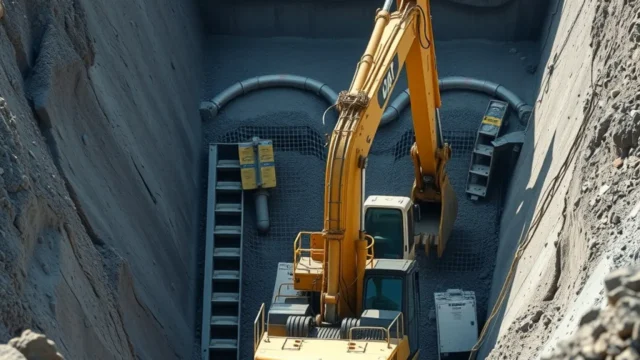
Data centre backlash reshapes US midterm politics
Voters across swing states are turning against AI data centre expansion, forcing Democrats and Republicans to abandon pro-tech stances ahead of midterm elections.


Key Takeaways
- Data centre opposition has become a top-tier midterm issue, ranking alongside the Iran War and economic concerns in voter priorities
- Both parties are reversing positions to match constituent anger, with even pro-business Republicans now calling for pauses and restrictions
- Community groups fighting data centre expansion have more than doubled to 833 in under a year, spreading to almost every US state
Data centre backlash is reshaping US midterm politics, according to BBC News. A year ago, most lawmakers gave little thought to these enormous computing warehouses. Now senators, governors and candidates across the country are scrambling to oppose them, driven by constituent fury that has surprised politicians of both parties.
The turnaround is real and sudden. A Democratic senator’s adviser told the BBC they now hold regular meetings tracking data centre impact and drafting legislation to slow expansion. “This happens sometimes, something starts slow and then it goes fast,” the adviser said. Public feeling has shifted that quickly.
Data centre backlash sits alongside the ongoing Iran War and economic anxiety as a top-tier midterm voter concern. Community groups fighting the projects have mushroomed from a handful to 833 in less than a year, operating in nearly every US state. The issue has become what the National Republican Senatorial Committee privately called “a sleeper issue for the entire election cycle”, so potent that even strongly pro-business politicians have had to reverse course.
| US data centres currently operating | Approximately 3,000, with potential to double within years |
|---|---|
| Community groups organising against data centres | 833 groups by early 2026, more than double the number from prior year |
| Jobs created per new data centre | 100 to 200 local jobs, fewer than industry claims |
| Ohio Senate race finding | Majority of voters oppose data centres; Republican Husted softened stance after trailing |
| Arizona action | Governor Hobbs enacted three-year pause on tax breaks for data centre projects in July |
| Texas data centre count | Nearly 300 operational, 170 more planned for development |
Why residents and politicians turned against data centres
Data centres are vast warehouses packed with computer chips stacked seven feet high, housing the processing power for internet services and artificial intelligence. A single Amazon facility now under construction in Indiana will span more than a square mile, home to 782 diesel generators. An OpenAI and Nvidia joint project in Ohio will stretch across six square miles, the size of an entire township.
Residents report concerns about noise during operation, strain on local water and energy supplies, speed of approvals by local authorities, and construction impacts. Angelita Soriano, an Indiana resident, told the BBC: “I don’t want to be the guinea pig for this.” She lives directly across from the Amazon project.
The data centre backlash has become tangled with broader anxiety about artificial intelligence itself. These warehouses are now the physical embodiment of rapid AI growth, and voters associate them with technological change they do not fully control or understand. That emotional weight has made the issue politically explosive across regions and party lines.
Chloe Autio, an AI policy adviser, said the backlash transcends traditional left-right divides. “This isn’t just an issue on the left, there is huge pushback among conservatives to data centres,” she told the BBC. “Whoever articulates a clear position and sticks to it, in either party, really stands to benefit.”

Politicians reversing positions to match voter anger
Arizona Governor Katie Hobbs initially supported data centre development. Public pressure forced her to shift entirely. In July she enacted a three-year pause on new tax breaks for data centre projects. Michigan Democrat Abdul El Sayed made strict data centre regulation a centerpiece of his successful Senate primary campaign. In Georgia’s governor race, a Democrat calling for a moratorium is locked in a dead heat with a Republican opponent who backs expansion.
The most striking reversal came in Texas, where Republican Governor Greg Abbott had celebrated the state as “the epicentre of AI development.” Within months, he reversed himself, citing “safety and quality of life” concerns. Texas hosts nearly 300 operational data centres with 170 more planned, making it the nation’s data centre capital.
Even strong Trump allies have broken ranks. Republican Senator John Husted of Ohio was facing a polling deficit to Democrat Sherrod Brown. Husted softened his data centre support, now saying decisions should rest with local voters and officials. Brown, who opposes new data centres, leads in recent polls. The NRSC wrote in a private memo that Republican politicians needed to completely reframe how they discuss the issue with voters.
Our read is that this represents genuine voter-driven political movement rather than cynical positioning. Polling shows data centre opposition cuts across geography, party and age. The 833 community groups organising against expansion speak to authentic grassroots anger, not manufactured talking points.
The gap between industry promises and actual job creation
Developers and state governments have long defended data centre construction by promising significant local job creation and economic benefit. The Brookings Institution, a non-partisan policy research group, tested this claim and found it wanting.
A new data centre creates between 100 and 200 local jobs, well below industry claims of much larger employment gains. More problematically, the projects have essentially no impact on local wages. The jobs created tend to be specialised technical roles filled by workers brought in from elsewhere, not opportunities for local residents seeking employment.
Balaji Tammabattula, chief executive of a company developing a 700-acre data centre complex in Liberty, Texas, acknowledged the communication gap. Despite his project being designed with rainwater capture and self-contained energy supply, he told the BBC: “There’s just such a high level of tension from the jump that you can’t really even break through with the facts.” Even when environmental concerns are addressed, resident opposition remains visceral.
This disconnect suggests that job creation arguments, the traditional defence for infrastructure projects that impose local costs, simply do not persuade voters who believe the trade-offs are unfair. They see their water, energy and quality of life at stake. The promised jobs feel abstract and unequally distributed.
When the political winds shift: what happens after the moratoriums end
The political response has largely taken the form of temporary measures. Arizona’s tax-break pause lasts three years. Other states have imposed one-to-three-year moratoriums on data centre approvals. These are holding actions, not permanent solutions.
The critical question is what happens when these pauses expire. Political winds can shift rapidly, especially if AI continues to be seen as economically vital, or if the midterm backlash recedes. By the time moratoriums end, a new election cycle may have redrawn the political map, and Big Tech’s lobbying influence may reassert itself.
For now, the data centre backlash is undeniably real and potent. It has already forced policy reversals at state level and is shaping Senate races in Ohio, Michigan and Texas. How long it endures, and whether it produces lasting regulation or merely delays development, remains uncertain.
Thewealthora’s in-depth guides explore how AI regulation and infrastructure policy affect tech company valuations and your investment portfolio.
Related coverage
- AI growth budget deficit: why Trump’s tax cut promise will fail
- Anthropic AI model false information: why it matters
- OpenAI web scraping: why the U.N. attack matters
- Voter eligibility lists: Trump team misses own midterm deadline
More stories like this on the World News.
Originally reported by BBC News. Facts verified; analysis and wording are Thewealthora’s own.

Sophia Bennett
Executive Editor, World
Sophia Bennett is Executive Editor of Thewealthora's World desk, which covers the stories outside the market pages that eventually end up on them: elections and policy shifts, energy and commodity supply, trade rules, conflict, and the slow events that reprice something months after they happen.