Standard Chartered RLUSD custody in Dubai reshapes collateral
A British bank now holds Ripple's stablecoin for institutions, and plans to let them use it as trading margin without touching an exchange.

Key Takeaways
- Standard Chartered RLUSD custody is live in Dubai; the collateral mirroring feature for margin trading still needs regulatory approval
- The structure keeps tokens at a systemically important bank rather than on an exchange, reducing counterparty risk
- Smaller bank-backed stablecoins could capture institutional business if rivals adopt the model
Standard Chartered RLUSD custody is now available to institutional clients through the bank’s Dubai branch, according to Forexlive. The British lender has begun holding Ripple’s dollar-backed stablecoin for eligible customers on the XRP Ledger, regulated by the Dubai Financial Services Authority.
But the headline announcement masks a deeper shift in how crypto collateral could move. The bank is also building a system with trading venue LMAX Group that would let clients post RLUSD as margin without the tokens ever landing on an exchange, a structure known as collateral mirroring. That leg is not yet live and still requires regulatory sign-off, with no launch date given.
Our read is that this matters more as market infrastructure than as a direct driver of RLUSD demand. The real significance lies in who gets to offer this model and how it spreads.
| RLUSD market value | Approximately $2.45 billion, under 1% of stablecoin market |
|---|---|
| Custody service live | Standard Chartered DIFC branch, regulated by Dubai Financial Services Authority |
| Collateral mirroring status | Not yet operational; awaits final documentation, testing and regulatory approval |
| Bank classification | One of 29 globally systemically important banks, per Financial Stability Board |
| Earlier crypto moves | Began USDC minting and redemption in July; custody since 2024 |
Why collateral mirroring changes the game
Under the traditional crypto trading model, an institutional client holds margin collateral on an exchange. If the exchange fails, the client’s tokens go down with it, despite the exchange not owning them. That counterparty risk has long been a barrier to larger institutions deploying serious capital.
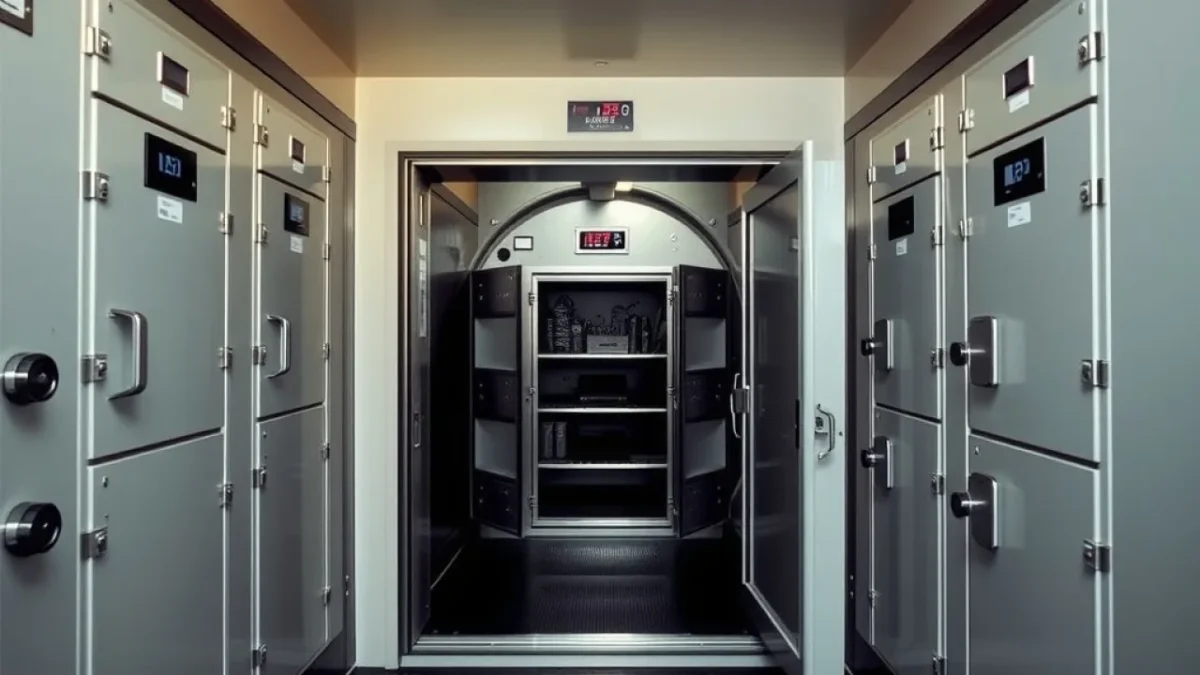
Collateral mirroring inverts that risk. The tokens stay in custody at Standard Chartered, one of 29 banks classified by the Financial Stability Board as globally systemically important. LMAX receives a digital record (the “mirror”) of the collateral’s value but never takes possession. If LMAX were to fail, the client’s tokens remain untouched at the bank.
Waqar Chaudry, who leads digital assets in Standard Chartered’s securities services business, framed the motivation plainly: institutions want crypto market access without sacrificing the safety standards they demand elsewhere. A systemically important bank operates under stricter capital and stress-testing rules than an exchange, and faces tougher regulatory supervision.
The collateral problem that banks now see
This reveals a structural tension that has quietly shaped crypto trading. Exchanges offer speed and tight spreads because they hold collateral in-house and manage risk internally. But that convenience comes with concentration risk: your margin sits on one platform, and platform failure wipes it out.
Regulated custody outside an exchange used to be slow. You would move collateral, wait for settlement, then post it to a venue. Collateral mirroring compresses that friction: the tokens live in the vault, but the venue can still credit their value in real time.
The model only works if the exchange trusts the bank’s custody infrastructure and the regulator accepts that a bank-held collateral mirror satisfies margin requirements. LMAX and Standard Chartered are still securing that approval. Standard Chartered runs DIFC custody already and began minting and redeeming USDC directly for clients in July, so the custody and regulatory groundwork is partly there.
What makes RLUSD eligible for this structure?
RLUSD is a dollar-backed stablecoin launched by Ripple in December 2024, held in reserve as US dollars, US government bonds and cash equivalents. It won Dubai Financial Services Authority approval in June 2025. At roughly $2.45 billion in market value, it sits below 1% of the $306 billion stablecoin market.
The stablecoin itself is smaller than USDT or USDC, but that is partly the point. A bank offering collateral mirroring for a small, well-reserved stablecoin can offer proof of concept before venues and institutions commit to the model at scale. If the structure works with RLUSD and LMAX, the pressure to replicate it across other stablecoins and venues will grow quickly.
Why this reshuffles institutional crypto business
The announcement opens a competitive door that has been sealed. So far, the largest stablecoins (USDT, USDC, DAI) dominate institutional collateral partly because they are accepted everywhere. A small stablecoin with limited venues has few reasons for an institution to hold it.
Now imagine a bank-backed stablecoin with collateral mirroring on a recognised venue. An institution gets counterparty protection, yield (potentially), and a regulated interface without fragmentation. If that works, smaller stablecoins with strong bank backing could capture business that previously flowed only to the largest names.
Venues face their own pressure. Once one exchange offers collateral mirroring, rivals will hear questions from institutional clients asking why they do not. Margins compress when features spread, and the exchange business benefits from collateral held in custody rather than on its books (it frees capital and removes risk).
Our read is that the bigger risk is not RLUSD replacing USDC, but institutional collateral gradually fragmenting across smaller, bank-backed names as custody and mirroring become normal. That spreads risk into the banking system and makes settlement more complex when collateral needs to move across venues.
The regulatory test ahead
Standard Chartered RLUSD custody is already running. The mirroring half, the one that changes market structure, is not. The bank has said it needs final documentation, testing and regulatory clearance before clients can post RLUSD as LMAX margin.
That timeline will signal whether other banks and venues treat this as a working model or a niche experiment. If approval arrives in weeks or months and the system runs cleanly, you would expect announcements from other custodians and trading venues within quarters. If approval stalls or the structure hits technical issues, the model may remain confined to Standard Chartered and LMAX only.
Read our deeper guides on how crypto custody works, how stablecoins are backed and what collateral risk means in institutional trading on Thewealthora.
Related coverage
- Sui’s Bitcoin finance platform Hashi launches with $500M backing
- Federal reserve stablecoin rules delayed over a year
- Bitcoin drops below 80K on surprise jobs report
- Tether frozen funds: Thai businessmen sue over $42M in scam coins
More stories like this on the Finance Wire.
Originally reported by Forexlive. Facts verified; analysis and wording are Thewealthora’s own.

Ethan Caldwell
Executive Editor, Markets
Ethan Caldwell is Executive Editor of Thewealthora's Finance Wire, the desk that carries this site's fast coverage of US equities, corporate earnings, central bank decisions and the macro calendar.