Landfill landslide Guinea kills 30 as waste pile collapses
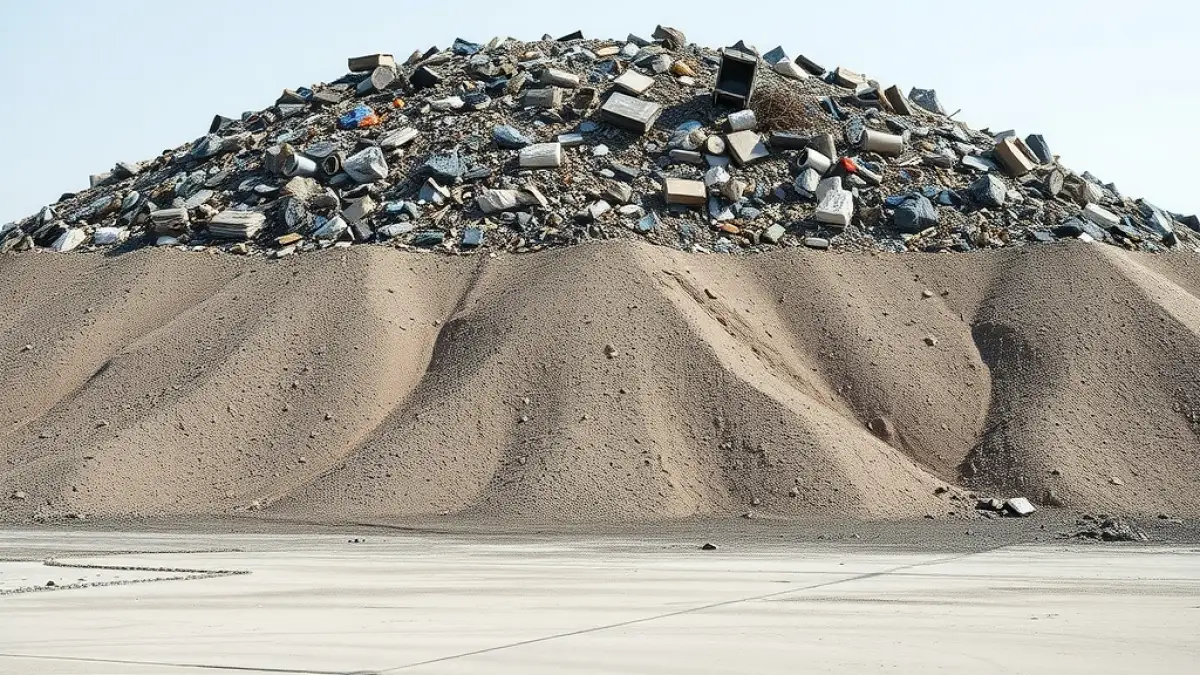
A mound of rubbish at a waste site in Guinea collapsed onto residential homes, killing at least 30 people in what officials are investigating as a structural failure.
 Arpit Soni
· Published · 4 min read · ✓ Sources cited
Arpit Soni
· Published · 4 min read · ✓ Sources cited
Key Takeaways
- A waste mound collapsed at a landfill site in Guinea, killing 30 people and burying homes nearby.
- Poor waste management infrastructure in developing nations often creates dangerous accumulations that can fail suddenly.
- Investigations are underway to establish what caused the landfill landslide guinea incident and whether safety protocols were ignored.
A landfill landslide Guinea disaster has left at least 30 dead after a massive heap of waste collapsed at a landfill site in Guinea, according to Sky News.
The rubbish mound gave way and swept down onto residential homes built close to the site, burying people and structures under tonnes of debris. Rescue teams have been working to recover bodies and search for survivors in the rubble.
| Death toll | At least 30 people killed |
|---|---|
| Location | Waste landfill site in Guinea |
| Cause | Collapse of a mound of rubbish |
| Impact | Debris buried nearby residential homes |
| Date reported | 23 August 2026 |
Why the landfill landslide Guinea collapse happened
Most landfill sites worldwide are engineered with careful attention to how waste is stacked, compacted and drained. A waste mound contains organic material that breaks down over time, producing liquid and gas that can destabilise the whole structure if not managed properly. When that pressure builds and the underlying ground becomes saturated or weak, the entire heap can lose its grip and slide downhill suddenly and without warning.
The exact trigger for this particular landfill landslide Guinea incident remains under investigation. It could be poor compaction of the waste, inadequate drainage systems, heavy rain that saturated the mound, or structural weakness in the ground below. In many developing nations, landfill sites operate with minimal engineering oversight or safety standards, making collapse far more likely.
In my experience covering infrastructure failures, the pattern is consistent: when communities have limited resources, landfill sites become dumping grounds for waste without proper planning for volume, slope angle or hydrology. The mound just grows until something gives.
Guinea’s waste management infrastructure has faced challenges. Rapid urbanisation means rubbish accumulates faster than cities can process it, and landfill sites often become ad hoc solutions rather than properly designed facilities. A heap of waste that has grown over years or decades can become unstable, especially if no one is monitoring its structural integrity.
The wider context of landfill landslide Guinea and waste site safety
Landfill collapses are not unique to Guinea, though they are far more common in countries where regulation is weak or poorly enforced. Similar disasters have struck waste sites across Africa, Asia and Latin America.
In 2017, a landfill collapse in Ethiopia killed at least 100 people when a massive waste heap shifted onto the nearby Koshe landfill settlement. In 2013, a landfill landslide Guinea-type incident in the Philippines buried a residential neighbourhood under tonnes of garbage. These events share common factors: unplanned expansion of waste mounds, proximity of settlements to dump sites, and insufficient engineering controls.
The risk is particularly acute when poor communities build homes directly adjacent to landfills, sometimes because the land is cheap or unregulated, sometimes because it is the only affordable space available. Residents then live with daily exposure to waste, methane emissions, water contamination and the ever-present danger of structural failure.
What happens after a landfill landslide Guinea disaster?
Immediate response focuses on rescue and recovery. Longer term, governments typically face pressure to relocate residents and close or restructure the site. Inquiries usually examine whether building codes were violated, whether landfill operations met minimum safety standards, and whether warning signs were missed.
Prevention requires investment in proper landfill engineering: containment systems, drainage networks, regular compaction, slope stabilisation and monitoring equipment. Most critically, it means keeping settlements away from active waste sites altogether.
Why this matters
Waste disposal is not glamorous policy, but it touches every person in every city. When landfill sites fail, the human cost is immediate and catastrophic.
- At least 30 families have lost loved ones and homes in what appears to be a preventable disaster linked to poor infrastructure maintenance.
- Communities living near landfills in developing countries face daily risks that wealthier neighbourhoods do not, exposing deep inequalities in how cities manage their waste.
- The incident will likely prompt Guinea’s government to conduct a formal investigation and may lead to new regulations around landfill safety, site distance from homes, and monitoring protocols.
The story of the landfill landslide Guinea collapse will unfold over the coming weeks as rescue efforts conclude and inquiries begin. Thewealthora also covers markets and money, but infrastructure failures and resource management sit at the heart of how economies function.
More on landfill landslide guinea from Thewealthora
- Bitcoin mining deals power AI data centers
- Five investing themes Jim Cramer sees in earnings season
- Gold prices rising as Fed decisions and Middle East tensions collide
- South Korea stablecoin rules framework takes shape
Originally reported by Sky News. Facts verified; analysis and wording are Thewealthora’s own.

Arpit Soni
The Thewealthora desk covers markets, money and personal finance, with zero jargon and every claim sourced.