Bitcoin cold storage exploit: $90m stolen
A $90m theft from Coldcard hardware wallets has shaken investor confidence as regulatory efforts stall in Washington.

Key Takeaways
- A $90m breach of Coldcard cold storage wallets has exposed vulnerabilities in offline Bitcoin storage, long considered the safest method
- The theft arrives as the Clarity Act, aimed at clarifying US crypto regulation, faces a tight Senate deadline with only five days remaining
- Crypto markets have interpreted the incident as a consolidation signal rather than a systemic warning, though confidence in cold storage devices has been tested
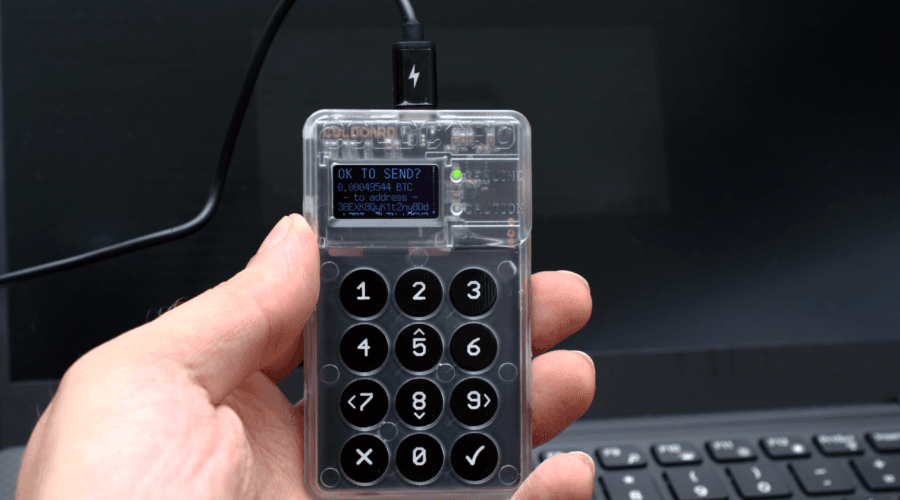
A Bitcoin cold storage exploit has resulted in the theft of $90 million, according to Cointelegraph. The breach, centred on Coldcard hardware wallets, has rattled investor confidence at a time when the regulatory environment for cryptocurrency already faces uncertainty.
Cold storage refers to keeping Bitcoin or other cryptocurrencies offline, on a device that never connects to the internet, making it theoretically immune to remote hacking. The Bitcoin cold storage exploit is significant precisely because this method has long been marketed as the gold standard of security. A breach of this magnitude suggests either a critical flaw in the device itself, a vulnerability in how users interact with it, or a social engineering attack that bypassed the device’s protections.
Why this matters for Bitcoin holders and regulation
The $90 million loss represents a genuine blow to sentiment. Market observers have described the incident as “sickening,” reflecting how deeply it undermines confidence in what should be the safest storage method available to retail and institutional investors alike.
The timing compounds the unease. The Bitcoin cold storage exploit coincides with stalled progress on the Clarity Act, proposed legislation designed to establish clearer regulatory rules for cryptocurrencies in the United States. With only five days left before a Senate vote deadline, the Bill faces an uncertain path forward. Clearer regulation could have reassured investors that the crypto ecosystem would mature, but instead the moment brings both a security crisis and regulatory fog.
What makes this incident notable is how markets have reacted. Rather than panicking, crypto traders have framed the consolidation (meaning larger players buying the dip and smaller holders capitulating) as a bullish sign. This suggests experienced participants believe the market will absorb the loss and move forward, though this remains speculation.
What happens next and what could change the picture
The focus now falls on two fronts: understanding exactly how the Bitcoin cold storage exploit occurred, and whether the Clarity Act can pass before the deadline expires.
If an investigation reveals that the vulnerability lies in Coldcard’s design rather than user error, trust in that particular device will face sustained damage. Competitors in the hardware wallet space (such as Ledger, Trezor, and others) may see increased demand from investors seeking alternatives, or the broader sector could face renewed scrutiny from regulators who will argue that self-custody is too risky for most users.
Could a single exploit change how people store Bitcoin?
A $90 million loss is large but represents a tiny fraction of total Bitcoin’s value (around $1.3 trillion at typical valuations). One breach is unlikely to reverse the long-term shift towards self-custody. However, if future exploits emerge or if this one spreads to other wallet manufacturers, confidence could erode enough to push some investors back towards holding Bitcoin on regulated exchanges, even though exchange hacks have also occurred historically.
On the regulatory side, the Bitcoin cold storage exploit may actually accelerate the Clarity Act’s progress. Lawmakers concerned about consumer protection might argue that clearer rules and custodian standards are precisely what the market needs. Conversely, opponents might use the incident to argue that cryptocurrencies are inherently risky and should face stricter limits.
What this means for you
The Bitcoin cold storage exploit illustrates broader trade-offs in how you store cryptocurrency. Each method, exchange accounts, self-custody, hardware wallets, multi-signature schemes, carries different risks. Understanding what has happened and why helps you make informed decisions about your own approach.
- If you use hardware wallets, review your specific device’s recent security bulletins and, if available, update firmware. A single incident with one brand does not invalidate cold storage as a concept, but it does highlight the importance of staying current on security patches.
- The Bitcoin cold storage exploit underscores why diversification of storage methods can reduce single-point-of-failure risk. Some investors split holdings across multiple devices, brands, or custody approaches rather than putting everything in one place.
- Monitor developments around the Clarity Act and any regulatory response to this breach. Future rules on custodian liability, insurance standards, or device testing could reshape which storage options are practical and legally supported for different investor types.
For a deeper look at how cold storage works, the risks of different custody methods, and how professional investors approach Bitcoin security, see Thewealthora’s guides to cryptocurrency storage and self-custody best practices.
More on Bitcoin cold storage exploit from Thewealthora
- Crypto legal news: FTX case, Polymarket bet and trading fine
- Minnesota crypto ATM ban takes effect after $1M in losses
- South Korea stablecoin rules framework takes shape
Originally reported by Cointelegraph. Facts verified; analysis and wording are Thewealthora’s own.

Ethan Caldwell
Executive Editor, Markets
Ethan Caldwell is Executive Editor of Thewealthora's Finance Wire, the desk that carries this site's fast coverage of US equities, corporate earnings, central bank decisions and the macro calendar.