Bitcoin BIP-110 mandatory signaling: what miners refusing to support means
Bitcoin's BIP-110 mandatory signaling has begun with fewer than 3% of miners backing it, forcing the network to test whether nodes alone can enforce a protocol change.

Key Takeaways
- Bitcoin BIP-110 mandatory signaling started with minimal miner adoption, testing whether full nodes can enforce upgrades without industry consensus.
- The low signaling rate suggests a potential hard fork may be needed if the network wants to activate the change across the board.
- This reveals a growing tension between those who run nodes and those who process transactions, raising questions about who truly governs bitcoin.
Bitcoin BIP-110 mandatory signaling has entered its enforcement phase with fewer than 3% of miners publicly supporting the upgrade, according to Cointelegraph. This creates an unusual situation: the network is now testing whether a protocol change can succeed when most of the industry that secures it refuses to participate.
A BIP, or Bitcoin Improvement Proposal, is a formal document suggesting how to change the network’s rules. BIP-110 is one such proposal, and mandatory signaling means the protocol now requires miners to explicitly indicate whether they will enforce it. Without that signal from the vast majority, activation becomes fragile.
Why so few miners are on board
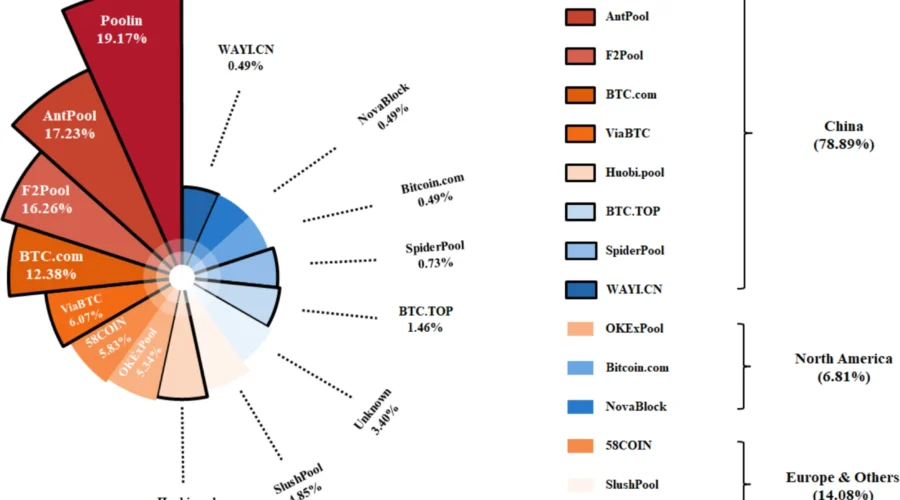
Mining pools and individual miners have shown little enthusiasm for BIP-110, leaving support stuck below 3%. This is not accidental disengagement. Miners, who validate transactions and secure the network through computational work, often resist changes they perceive as reducing their revenue, complicating their operations, or arriving without sufficient consultation.
The low adoption suggests the bitcoin community either disagrees with what BIP-110 proposes, or believes it was rushed without proper debate. Either way, miners have effectively voted with their infrastructure.
Bitcoin BIP-110 mandatory signaling normally leads to one of two outcomes: activation through overwhelming consensus, or abandonment. This time, neither appears likely in the traditional sense.
What happens when nodes enforce alone
The more striking detail is that the protocol is now testing whether full nodes, software run by individuals and institutions that validate transactions, can enforce BIP-110 regardless of miner resistance. Nodes act as the network’s rule-checkers, and they outnumber miners by orders of magnitude.
If nodes enforce a change that miners reject, you get a network split: two separate versions of bitcoin operating under different rules. The version backed by miners typically retains the original bitcoin name and value, whilst the node-enforced version becomes a fork with reduced economic weight.
This scenario is not theoretical. Bitcoin Cash, Bitcoin SV and other forks emerged this way when network participants could not agree on fundamental rules.
Could bitcoin hard fork over BIP-110?
Yes, if nodes maintain enforcement and miners refuse adoption. The summary mentions discussion of a hard-fork fallback, which means developers are openly considering whether to formally abandon the upgrade or pursue it anyway through forced network division. A hard fork is the nuclear option: it rewrites the rulebook and essentially forces everyone to choose sides.
The presence of this conversation signals genuine uncertainty about whether BIP-110 can succeed on consensus alone.
What this means for you
Bitcoin BIP-110 mandatory signaling reveals a structural question about how cryptocurrency networks actually change: who decides, and what happens when they disagree?
- If you hold bitcoin, watch whether BIP-110 succeeds or fails as a barometer for how robust bitcoin’s governance is. A successful upgrade despite low miner support proves nodes matter. Failure or a fork proves miners still hold veto power.
- If you run a node, this event is your moment: you are now actively choosing whether to enforce a protocol change the mining industry rejected. That choice has real consequences for the network you participate in.
- If you are considering entering crypto, observe how bitcoin handles internal disagreement. Forks are not crashes, but they do fragment value and create confusion. How the community resolves BIP-110 will inform your confidence in the network’s maturity.
Thewealthora has detailed guides on how bitcoin upgrades work and what hard forks mean for investors in our cryptocurrency governance explainers.
More on bitcoin BIP-110 mandatory signaling from Thewealthora
- Why Bitcoin’s biggest holder just rejected a major upgrade proposal
- Base preps tokenized stock trading on blockchain
- South Korea’s largest bank launches JPMorgan blockchain payments
Originally reported by Cointelegraph. Facts verified; analysis and wording are Thewealthora’s own.

Ethan Caldwell
Executive Editor, Markets
Ethan Caldwell is Executive Editor of Thewealthora's Finance Wire, the desk that carries this site's fast coverage of US equities, corporate earnings, central bank decisions and the macro calendar.