Amelia Earhart search team braves giant crabs on Pacific island
Researchers hunting for aviation pioneer Amelia Earhart's plane have arrived at a remote Pacific island, but will sleep on their ship to avoid giant coconut crabs.

Key Takeaways
- An Amelia Earhart search expedition has arrived at Nikumaroro Island to inspect a mysterious object spotted in satellite imagery in 2020, potentially wreckage from her 1937 disappearance.
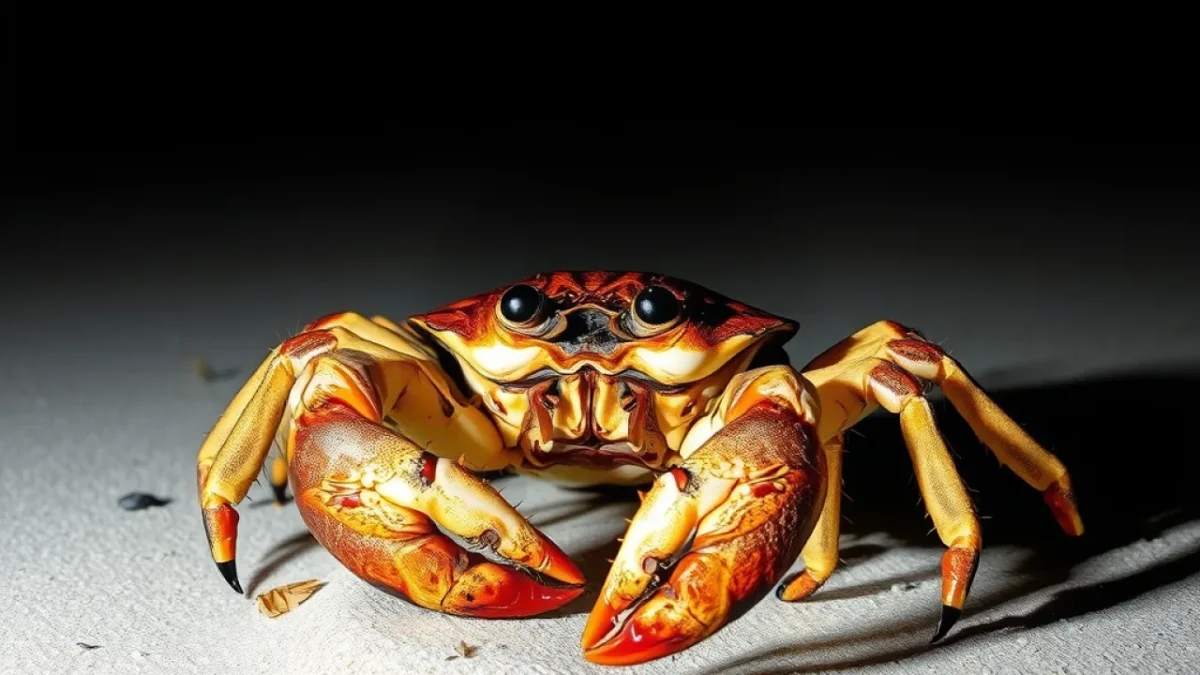
- Coconut crabs, the world's largest land-dwelling crustaceans, are so dangerous the research crew will sleep aboard their ship each night rather than camp on shore.
- This is the first authorised visit to the island in seven years and the first to the Taraia Peninsula in over 15 years, making it a rare opportunity to investigate decades of mystery.
An Amelia Earhart search team has reached Nikumaroro Island, a remote atoll in the South Pacific nation of Kiribati, according to BBC News. The expedition from the Archaeological Legacy Institute and Purdue University arrived on Monday to investigate a mysterious object spotted in satellite imagery since 2020, which some researchers believe could be wreckage from Earhart’s plane.
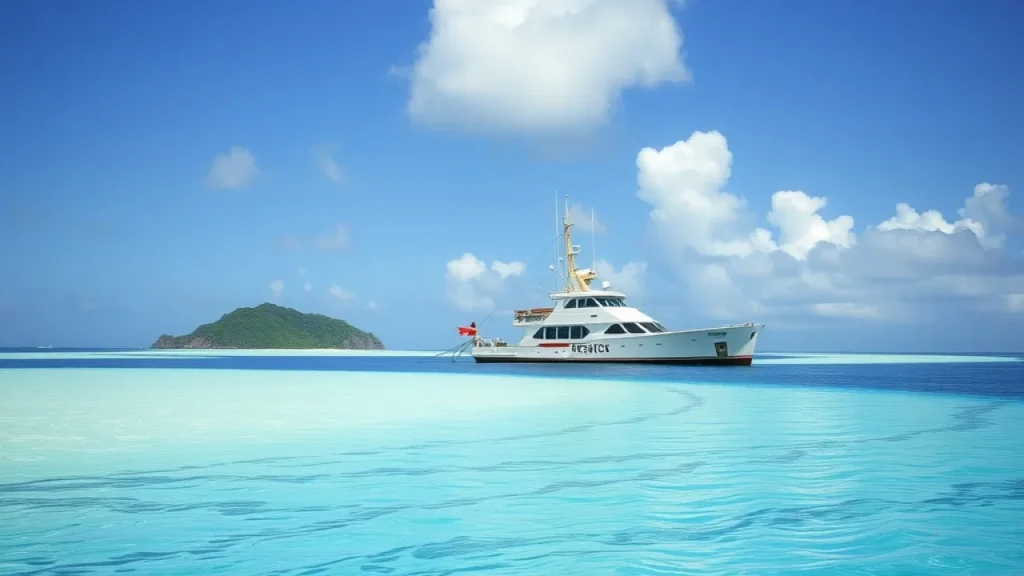
The five-day mission marks the first authorised visit to the island in seven years and the first to the Taraia Peninsula in over 15 years. But the researchers will not stay overnight on shore. Instead, they will sleep aboard their ship, the Marin Mainiku, each night because of the island’s population of coconut crabs.
| Expedition location and arrival | Nikumaroro Island in Kiribati, South Pacific, arrived 12 October 2026 |
|---|---|
| Teams involved | Archaeological Legacy Institute and Purdue University researchers |
| Planned duration | Five days of fieldwork |
| Target of investigation | Taraia Object, spotted in satellite imagery in 2020, located 10 feet from shore in 5 feet of water |
| Coconut crab size | Leg span up to 1 metre, body weight over 4kg, can lift up to 28kg |
| Earhart's original mission | Circumnavigation in Electra plane, vanished 2 July 1937 en route to Howland Island |
Why coconut crabs force the team off the island
Coconut crabs are the world’s largest land-dwelling crustaceans, with a leg span reaching up to one metre and body weight exceeding 4kg. They can lift objects weighing up to 28kg, crack open coconuts, climb trees, and hunt live prey including rats and birds.
More significantly, they are nocturnal hunters. Once darkness falls, they emerge to forage and become too dangerous for humans to be anywhere nearby. The crabs are aggressive enough that staying on the island at night, even in a camp with protection, is considered impractical by the research team.
Several theories about Earhart’s fate propose that she survived a crash on Nikumaroro but was then overcome by the crabs. In 2018, a historical aircraft recovery group conducted an experiment using pig carcasses that demonstrated how these crabs can drag bodies to their burrows and strip bones of flesh in less than two weeks, lending some credibility to that hypothesis.
What the Taraia Object actually is remains unknown
The search centres on the Taraia Object, which sits in shallow water only 10 feet from the shore in the lagoon. Satellite imagery has shown what appears to be a wreck-like form, but scepticism remains widespread among experts.
Could this really be Earhart’s plane?
Some researchers believe the object is aircraft wreckage from Earhart’s twin-engine Electra, the plane she was flying when she disappeared in 1937. Others are far less convinced, with one theory suggesting the object is simply a collapsed tree or other natural formation that resembles debris in satellite photos.
The expedition will use dredging equipment to move sediment and allow visual inspection of whatever lies in those five feet of water. They will also search for metal signatures using magnetic detection equipment, which would help distinguish between a human-made aircraft and natural debris.
The 1937 disappearance that still captures global imagination
Amelia Earhart was attempting to circumnavigate the globe when her plane vanished. She had already flown from California across South America, Africa and Asia, and arrived in Papua New Guinea on 2 July 1937. From there, she and navigator Fred Noonan were heading towards Hawaii but planned to refuel at the uninhabited Howland Island, a target so small in the vast Pacific that finding it was notoriously difficult.
The official explanation, accepted by most historians, is that communication problems prevented Earhart from locating Howland. Unable to find the island and running low on fuel, the plane crashed into the ocean. No trace of the aircraft or crew was ever confirmed.
The mystery has generated decades of competing theories. Some researchers proposed that Earhart survived and landed on Nikumaroro Island instead, where she lived for a time before succumbing to injury, illness or predation. The discovery of bones in 1940, not far from Nikumaroro, fuelled this hypothesis, though the remains were lost before they could be definitively identified.
Expedition leader Rick Pettigrew described the current mission as potentially solving “the outstanding mystery of the disappearance of Amelia Earhart and Fred Noonan more than 89 years ago.” The team will need to work quickly. El Niño weather patterns, described as the strongest ever recorded, threaten to disrupt access to the island and limit the safe window for diving and dredging operations in the shallow lagoon.
Thewealthora covers markets and money, but also tracks major news events that shape the world around you.
Related coverage
- Neanderthal wooden tools reveal hidden Stone Age craftsmanship
- Sell chips buy software trade returns as markets shift
- Crypto phishing campaign targets 885,000 phone numbers
- Trump low-keying Iran while tightening economic pressure
More stories like this on the World News.
Originally reported by BBC News. Facts verified; analysis and wording are Thewealthora’s own.

Sophia Bennett
Executive Editor, World
Sophia Bennett is Executive Editor of Thewealthora's World desk, which covers the stories outside the market pages that eventually end up on them: elections and policy shifts, energy and commodity supply, trade rules, conflict, and the slow events that reprice something months after they happen.