Neanderthal wooden tools reveal hidden Stone Age craftsmanship
Spanish archaeologists uncovered 597 preserved wooden remains at a rock shelter near Barcelona, showing Neanderthals were skilled craftspeople, not primitive cousins.


Key Takeaways
- Mineral deposits preserved 597 wooden Neanderthal artifacts at a Spanish rock shelter, revealing routine woodworking across 20,000 years.
- Finds include hunting spears, bark trays, shelter poles and a unique carved club, suggesting complex planning and material knowledge.
- Discovery challenges the stereotype of Neanderthals as primitive, showing they selected specific wood types for different tasks.
Archaeologists in Spain have catalogued 597 preserved wooden Neanderthal tools spanning 20,000 years, according to a study published in Science Advances. The discovery at a rock shelter called Abric Romaní, near Barcelona, suggests Neanderthals were far more sophisticated craftspeople than long assumed, with knowledge of materials and deliberate design.
The tools survived because mineral-rich water from a limestone cliff above the shelter repeatedly coated objects lying on the floor. When the wood eventually decayed inside this mineral crust, it left behind hollow moulds that preserved the exact shape of spears, digging sticks, bark trays, shelter poles and other items.
| Wooden remains found | 597 artifacts at Abric Romaní rock shelter, west of Barcelona |
|---|---|
| Date range | 62,000 to 40,000 years ago |
| Preservation method | Mineral-rich limestone crust formed around wood, leaving hollow molds when wood decayed |
| Intentional tools | Only 13 of 597 remains were made or modified by Neanderthals |
| Club dimensions | 16-centimetre handle with 14-centimetre pointed head, carved from single piece |
| Best-preserved spear | 2.45 metres long with impact fracture matching Aboriginal Australian hunting damage |
How limestone moulds preserve what wood cannot
Wood normally rots away within decades or centuries because bacteria and fungi break down the material. We know almost nothing about Paleolithic woodwork for this reason: stone survives, wood does not. The few wooden artefacts we do have come from waterlogged sites in places like Germany and England, where lack of oxygen slows decay to a crawl.
Abric Romaní worked differently. Calcium-rich spring water dripped from the travertine cliff face above the shelter and settled on anything below: logs, leaves, Neanderthal tools. The buildup created a limestone shell that sealed the wood inside. Over time, the wood decomposed into nothing, leaving only the hollow negative, a perfect stone mould of the original object.
Modern excavation means cutting away the fragile crust with extreme care, mapping and photographing each find, then using 3D scanning and printing to create copies for research and display. The hollow moulds are so detailed that wood-cell structures are sometimes visible under a microscope.
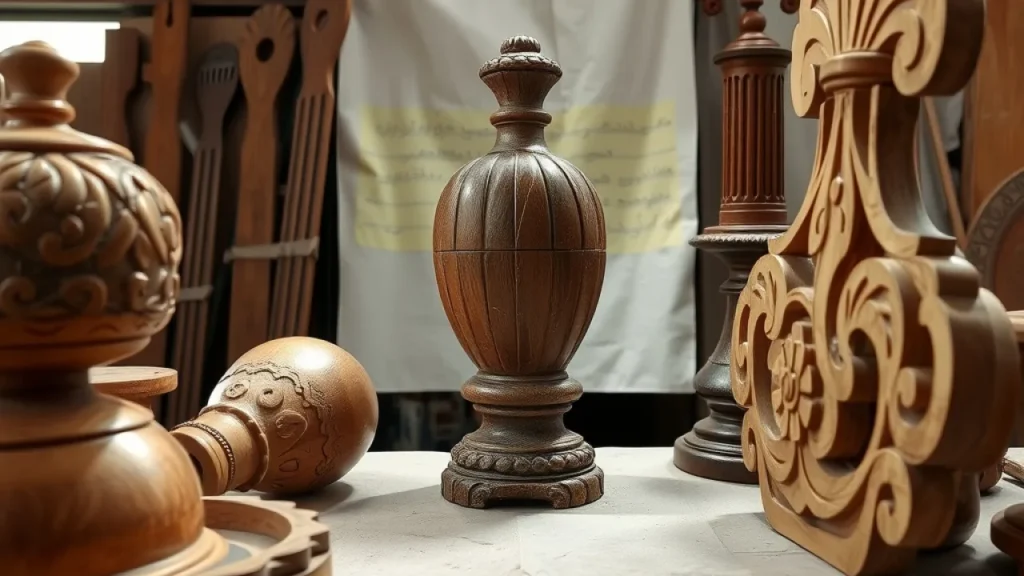
Evidence of routine craft knowledge across millennia
Of the 597 remains, only 13 were deliberately shaped by Neanderthals. The rest were natural wood: fallen branches and firewood, mostly Scots pine. But those 13 objects reveal something archaeologists rarely see in Neanderthal sites: evidence of woodworking as routine practice, not one-off improvisation.
Four shallow trays made from juniper bark, the largest measuring 55 by 20 centimetres, were found near cooking fires. Juniper’s fibrous bark made it ideal for this use. Similar vessels, called coolamons, were made by Aboriginal Australians for carrying food and scooping embers. A branchless pole more than five metres long was found in the shelter’s back section, where archaeologists believe it leaned against the wall as a windbreak or frame for a simple hut.
The choice of materials shows intentional selection. Scots pine is easy to work and dries quickly, making tools cheap to replace. Fresh wood was used for tools, dry wood for fuel. This implies planning: Neanderthals knew what materials to collect and where to find them.
What did Neanderthals use the mysterious club for?
The most unusual find was a club carved from a single piece of wood, with a 16-centimetre handle and a pointed, roughly triangular head about 14 centimetres tall. A right-angle step where handle meets head may have prevented the hand slipping. Nothing quite like it has been found before. The only earlier object thought to be a club, from Kalambo Falls in Zambia, dates to roughly 400,000 years ago.
Anthropologists studying modern hunter-gatherers have seen similar clubs used to kill game at close range, in combat, and as symbols of social status. But Neanderthals’ club was found in a living area next to cooking debris and stone tools, suggesting everyday use rather than ritual purpose.
Hunting skill and Neanderthal sophistication
Two spears and a pointed stick were discovered lying close to the skulls of red deer, one still bearing antlers. The best-preserved spear is 2.45 metres long. Analysis of its point shows an impact fracture identical to damage seen on spears used by Aboriginal Australians, the kind of break that occurs when a point strikes bone or similarly hard material.
This pattern of finds, weapons near animal remains, cooking hearths surrounded by bones and stone-knapping debris, rows of small sleeping fires in the back, paints a picture of a group that hunted, ate together, made tools and slept under simple shelter. The shelter was occupied across at least 20 consecutive occupation layers, meaning the same space was used repeatedly over millennia.
These discoveries add weight to a broader shift in how researchers view Neanderthals. Evidence has accumulated over recent decades that they made cord, created symbolic objects and interbred with Homo sapiens. Wooden tools suggest they were not primitive brutes but intentional craftspeople with knowledge of materials and purposeful design.
Why similar discoveries may be waiting to be recognised
The team began work at Abric Romaní in 1983, yet Neanderthal wooden tools here were not properly identified and catalogued until now, after decades of study. Lead archaeologist M. Gema Chacón worries that other sites may hold undiscovered wooden artefacts simply because excavators did not recognise them or did not preserve them.
“I hear from colleagues telling me perhaps we found something that we thought was wood, we excavated it, we took pictures, but we didn’t keep it,” Chacón says. “Now they say perhaps it could have been a tool.” Budget and time constraints mean many excavations move fast, and wood can look unremarkable without careful examination.
The implications are large: if other shelters and rock faces like Abric Romaní exist across Europe, they may hold wooden remains that have been overlooked. Each discovery reshapes understanding of Neanderthal life and capability, and each lost site represents knowledge we may never recover.
Original reporting on this neanderthal wooden tools: Ars Technica.
Related coverage
- Spain housing crisis sparks fury after woman’s death
- Dow Jones historical data: what 130 years actually says (not what your uncle thinks)
- Ethereum stuck in the middle: what $1,813 and $1,739 mean
- Crypto Regulation News: What Actually Changed in 40 Days (And What to Do Now)
More stories like this on the World News.
Originally reported by Ars Technica. Facts verified; analysis and wording are Thewealthora’s own.

Sophia Bennett
Executive Editor, World
Sophia Bennett is Executive Editor of Thewealthora's World desk, which covers the stories outside the market pages that eventually end up on them: elections and policy shifts, energy and commodity supply, trade rules, conflict, and the slow events that reprice something months after they happen.