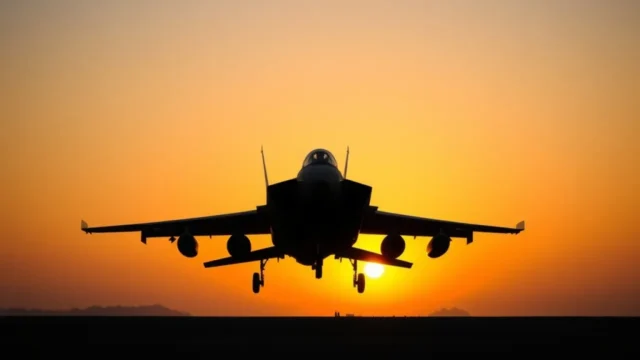
Autonomous aircraft are taking off in agriculture first
Pilot-free planes are already spraying crops and delivering cargo, with companies racing to expand beyond agriculture into passenger flight.

Key Takeaways
- Autonomous aircraft are already operating commercially in crop spraying and cargo delivery, with Pyka approved for US and Brazil operations
- The technology faces a higher safety bar than self-driving cars because aviation accidents have far more severe consequences
- Companies differ sharply on whether AI is essential: some avoid it entirely for certification, others see it as key to safer detect-and-avoid systems
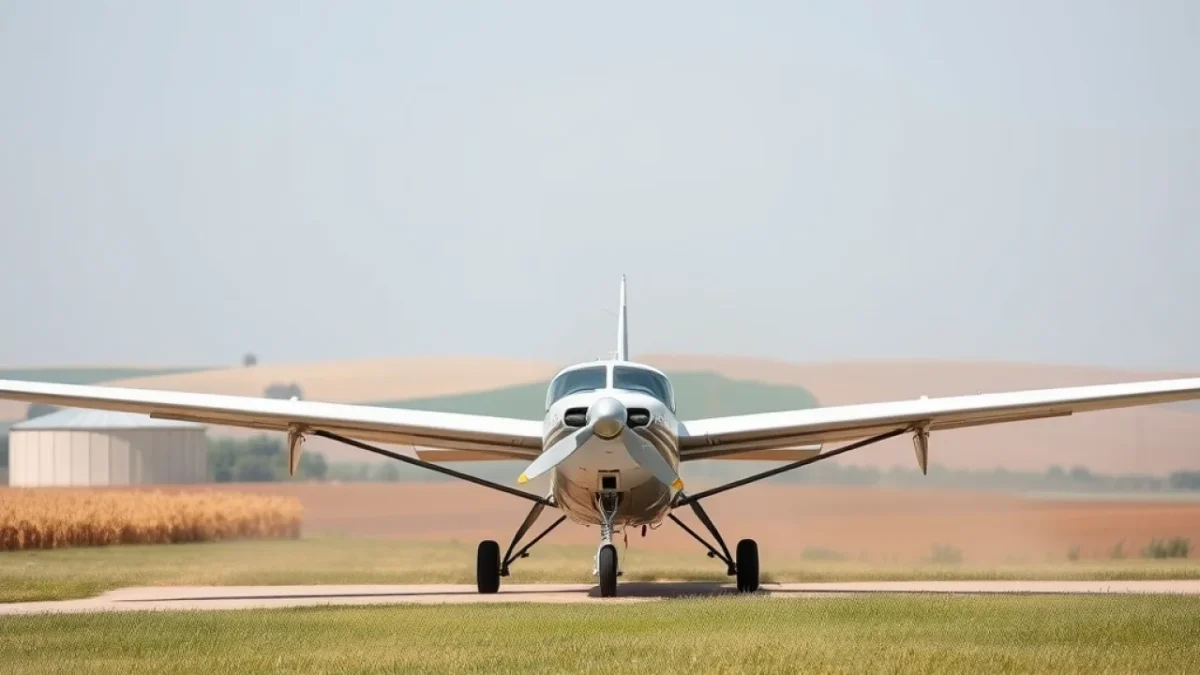
Autonomous aircraft are already spraying thousands of hectares of crops across the United States and Brazil, according to BBC News, marking the first commercial deployment of self-flying planes. Unlike the flying taxis dominating headlines, these agricultural machines represent a quieter but faster-moving race towards pilot-free aviation.
A crop sprayer built by Pyka, a San Francisco-based startup, recently completed another routine mission over an alfalfa field in California’s San Joaquin Valley. The fully electric plane took off, navigated to its target area, sprayed its load, detected its tank was empty, landed itself, swapped batteries with a ground crew, and resumed spraying exactly where it had left off, all without a single pilot in any cockpit.
The autonomous aircraft design offers practical advantages over human-piloted crop dusting. Flying lower to the ground without fear of pilot discomfort means less chemical drift, which reduces the total volume of spray needed per field. In Brazil, Pyka’s fleet already carries out work that used to require experienced crop-dusting pilots, a role that has grown increasingly dangerous and difficult to staff.
| Pyka production target | Scale from 24 aircraft annually to 1,000 by 2030 |
|---|---|
| Aircraft price per unit | $550,000 |
| Flight duration and spray capacity | 35 minutes per charge, carries up to 300 litres of liquid |
| Pyka aircraft wingspan | 11.5 metres |
| Pyka aircraft in operation | About a dozen already spraying cotton and soybeans in Brazil |
| US approval milestone | Pyka won authorization for commercial civilian use last year |
Why autonomous aircraft are emerging from agriculture first
Flying planes without pilots has proved harder than building self-driving cars, despite aircraft operating in far more predictable environments than roads. The chief reason is that aviation regulators hold autonomous systems to an extraordinarily high safety standard. A car crash might injure occupants; an aircraft accident can kill dozens of people across a large radius.
This regulatory barrier explains why autonomous aircraft have lagged behind self-driving vehicles despite decades of research. Tech giants poured billions into car autonomy, but the aviation industry faced certification demands so strict that only military programmes with huge budgets could justify the engineering effort. Pyka only secured US approval last year for its crop sprayer, and even that approval comes with tight restrictions: operations are limited to agricultural fields, and a ground operator with a visual observer must be present at all times.
Brazil has proved more permissive, giving Pyka earlier certification there. The UK has yet to approve any autonomous fixed-wing aircraft for long-term commercial service, though Windracers, a British company, is seeking permission to run an autonomous cargo service to remote islands in Shetland and Orkney.
How do autonomous planes actually work?
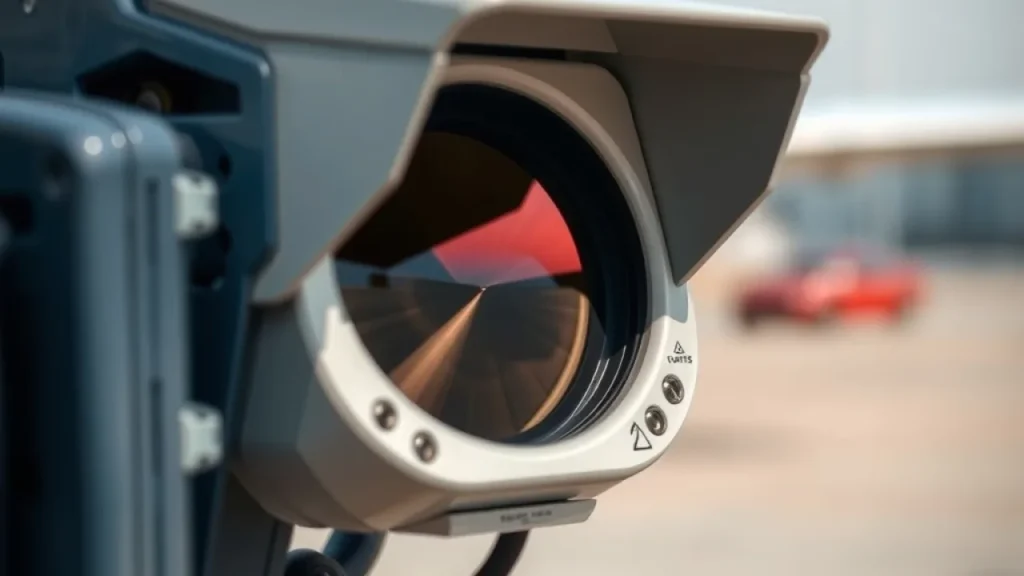
Autonomous flight is fundamentally different from autopilot. Autopilot assists a human pilot much like cruise control in a car. True autonomy means the aircraft handles every phase of flight, including the riskiest moments: takeoff and landing. The plane uses sensors, radar, lidar (a laser-based detection system), cameras and algorithms to perceive its environment and make flight decisions with minimal human input.
The biggest unsolved challenge is replicating a pilot’s ability to spot and avoid other aircraft and obstacles. There is essentially no margin for error. Companies are approaching this problem in fundamentally different ways, and those choices reveal a deeper split in the industry about whether artificial intelligence is a solution or a risk.
The industry divide over artificial intelligence
Reliable Robotics, a US company backed by Boeing’s investment arm, has deliberately avoided AI altogether. Its engineers argue that AI systems would complicate certification by introducing unpredictable behaviour. Instead, Reliable has fitted forward-looking air-to-air radar that can detect other aircraft more than eight kilometres away, paired with software that follows fixed, rule-based logic to decide how the plane should respond. The company’s founder argues this approach is “better than a pilot’s eyeballs”.
Merlin Labs, also based in the US, has taken the opposite bet. It is building AI-powered camera systems to detect and classify objects, and plans to use generative AI trained on thousands of hours of recorded radio exchanges to interpret instructions from air traffic control and respond automatically. Merlin’s ambition is to eventually remove the remote human pilot entirely, whereas Reliable intends to keep a fully trained remote pilot on the ground indefinitely.
Pyka has adopted a middle path. The company uses lidar for near-range detection of trees, vehicles and large birds, but plans to add AI-powered cameras for the first time to handle one specific task: distinguishing a distant aircraft from other visual clutter. As Pyka’s CEO puts it, “For a lot of things there’s no need to use AI…but for figuring out that six pixels in the distance are an airplane versus some other smudge, it is perfect territory.”
The path from cargo and crops towards passenger flights
Companies building autonomous aircraft fall into two camps: those designing new aircraft from scratch, and those retrofitting existing certified planes. Pyka builds its own 11.5-metre-wingspan machines purpose-built for spraying. Reliable and Merlin are instead modifying existing aircraft, which lets them focus purely on proving the autonomous system works without also seeking approval for a new plane design.
Reliable is currently testing on the Cessna 208B Grand Caravan, a single-pilot cargo plane. Merlin has worked its way up from military drones to progressively larger military transport aircraft, and is now applying its system to the Lockheed Martin C-130J, a two-pilot military transport plane. Both companies see military contracts as a pathway to proving the technology before tackling the stricter civilian rules.
Pyka’s CEO has explicitly stated the long-term goal: a fleet of autonomous minibus-capacity aircraft carrying passengers up and down the US coasts. He believes autonomous fixed-wing aircraft could reach that milestone before electric vertical takeoff and landing aircraft, or eVTOLs, which have drawn far more venture capital and media attention. The US Air Line Pilots Association has called removing pilots “a serious gamble with safety”, whilst the crop-dusting pilots’ association points out that small uncrewed aircraft are hard to spot and argues that human pilots can spray larger areas faster.
Pyka is currently scaling production from about two dozen aircraft per year towards 1,000 by 2030, each priced at $550,000. The success or failure of that expansion will largely determine whether autonomous aircraft prove transformative or remain a niche tool for agriculture and remote logistics.
More on autonomous aircraft from Thewealthora
- American Airlines targets $3B profit gap with fleet overhaul
- 10 money habits that separate the rich from everyone else
- US government moves $297M in crypto to Coinbase
- Bitcoin ETF inflows hit six-day streak as flows stabilise
More stories like this on the World News.
Originally reported by BBC News. Facts verified; analysis and wording are Thewealthora’s own.

Sophia Bennett
Executive Editor, World
Sophia Bennett is Executive Editor of Thewealthora's World desk, which covers the stories outside the market pages that eventually end up on them: elections and policy shifts, energy and commodity supply, trade rules, conflict, and the slow events that reprice something months after they happen.