Katie Boulter US Open exit: one game in 58 minutes
British number one Katie Boulter loses 6-1 6-0 to Karolina Muchova in the second round, winning just one game in under an hour.

Key Takeaways
- Boulter lost 6-1 6-0 in 58 minutes to seventh seed Karolina Muchova, one of the heaviest defeats of her career
- Her serve collapsed with eight double faults, zero aces, and she won just 33% of points behind her first serve
- The British number one has won only two Grand Slam matches all season and struggles to find consistency on court
Katie Boulter’s US Open exit was as swift as it was painful, according to BBC Sport. The British number one lost 6-1 6-0 to Czech seventh seed Karolina Muchova in just 58 minutes, a demolition that has left her questioning everything about her game.
Boulter won only one game in the entire match. It was the kind of scoreline that sticks with a player, the sort of defeat that sends you straight to the practice courts asking hard questions.
| Final score | 6-1 6-0 to Karolina Muchova in 58 minutes |
|---|---|
| Games won by Boulter | 1 |
| Boulter double faults | 8 with 0 aces |
| First serve win percentage | 33% |
| Unforced errors vs winners | 22 errors, 4 winners |
| Grand Slam wins this year | 2 matches total across four tournaments |
How the Katie Boulter US Open exit unfolded
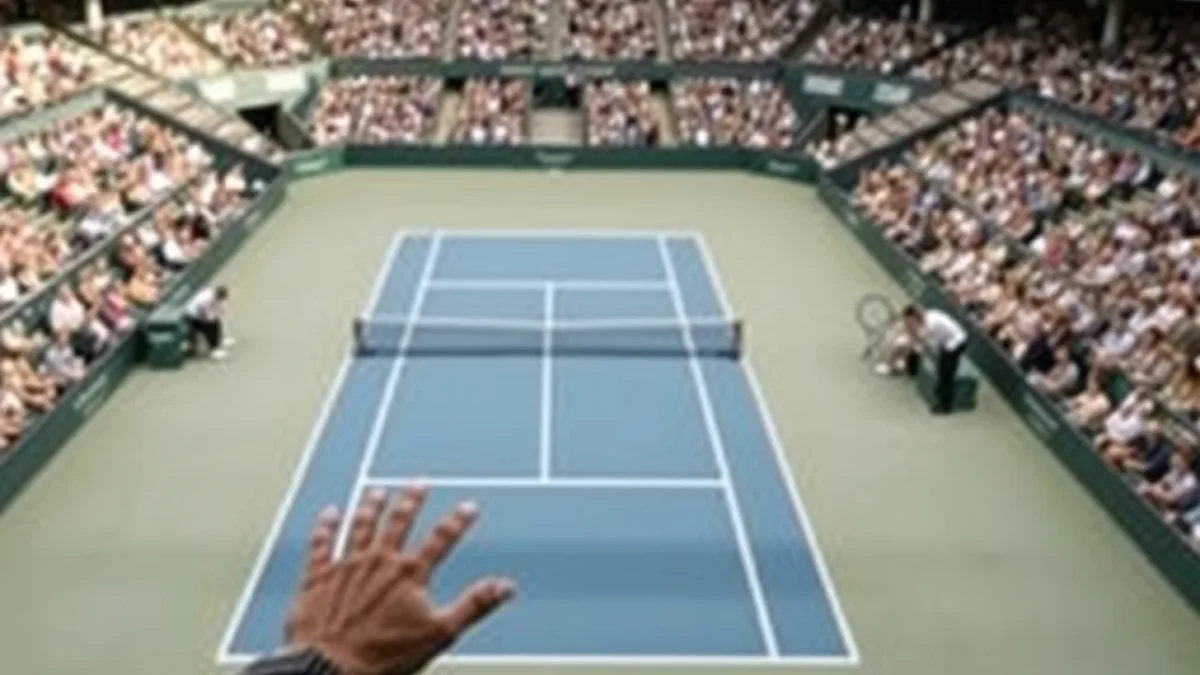
The match was moved from an outer court to the 14,000-seat Louis Armstrong Stadium after heavy rain struck Flushing Meadows, but the change of venue seemed only to compound Boulter’s misery. She immediately looked uncomfortable in the larger arena.
Her serve, usually a foundation of her game, came apart entirely. Eight double faults, zero aces, and she won just 33 percent of the points when her first serve landed. Unable to hold any of the seven break points she faced, Boulter made 22 unforced errors against only four winners.
Muchova, by contrast, played with clinical precision. The Wimbledon runner-up struck 14 winners, made just nine unforced errors, and deployed drop shots and heavy groundstrokes with visible intelligence.
Boulter herself described it as “a bad day at the office, times two”. She admitted the stadium atmosphere, the roof, and the noise had distracted her in ways she usually resists. “I let things distract me. I’m not usually aware of everything going on,” she said after the match. “I have to deal with it better.”

What this Katie Boulter US Open exit reveals about her season
The loss sits within a much broader pattern that has made 2026 deeply frustrating for the British number one. She has won just two Grand Slam matches across all four major tournaments this year.
Since losing in the first round at Wimbledon, she has won only two of six matches she has played. That kind of form would concern any player, but it is especially troubling for someone ranked in the world’s top 70 and carrying the weight of being Britain’s leading women’s player.
Former world number five Daniela Hantuchova suggested the problems run deep. Speaking to BBC Radio 5 Live, she said Boulter needed a serious reset with her team. “First of all, it was very obvious today that it was the serve. I feel like it needs to be cleared up because she was losing the rhythm and not using her legs,” Hantuchova said.
“If I am Boulter, I would be on the practice court tomorrow. If she still wants to invest everything into her tennis then she needs to be on the court.”
Why has Boulter’s form dropped so sharply this year?
The specifics remain unclear, but the Katie Boulter US Open exit points to technical issues rather than motivation. She has personal stability (marrying Australian player Alex de Minaur in July), but her tennis has deteriorated consistently since the grass-court season.
The serve breakdown is structural, not a one-off bad day. Neither is winning two games across four Grand Slams. Something in her preparation, technique or mental approach has shifted.
Other British results at Flushing Meadows
Boulter was not alone in struggling. Jacob Fearnley, a lucky loser who had pulled off a five-set comeback in round one, fell 6-3 6-3 3-6 6-3 to Argentina’s Tomas Martin Etcheverry. He made 57 unforced errors and hit 11 double faults, a performance pattern that echoes Boulter’s own breakdown.
Jan Choinski also departed, losing 6-3 6-1 7-6 to Netherlands player Botic van de Zandschulp in a first-round match delayed by rain.
Francesca Jones offered a brighter note. She returned to complete her first-round match against Poland’s Magda Linette after rain had interrupted play on Tuesday. Trailing after the restart, Jones rallied to win the final set and advance, claiming just her second Grand Slam match win.
The Katie Boulter US Open exit will now prompt serious conversations within her camp about how to arrest this decline before the season ends. Major tournaments come and go, but the consistency gap between her ranking and her results has become too wide to ignore.
More on katie boulter us open exit from Thewealthora
- Crypto trading launches at Swiss bank BancaStato
- Gas prices squeeze BNPL shoppers as Affirm reports earnings
- Mayors planning powers: England’s big shift in housing decisions
- BitMEX delists 65 trading pairs in July shutdown
More stories like this on the World News.
Originally reported by BBC Sport. Facts verified; analysis and wording are Thewealthora’s own.

Sophia Bennett
Executive Editor, World
Sophia Bennett is Executive Editor of Thewealthora's World desk, which covers the stories outside the market pages that eventually end up on them: elections and policy shifts, energy and commodity supply, trade rules, conflict, and the slow events that reprice something months after they happen.